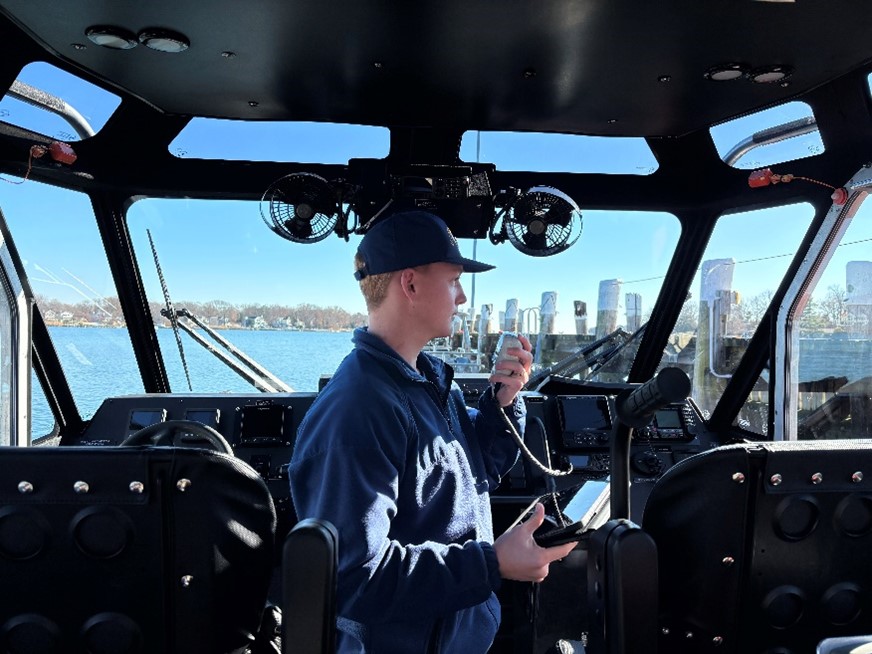
A Coast Guard Force Design 2028 Initiative will put a digital device (tablet, phone, and/or laptop) in the hands of every active duty member in the next two years. More than just a physical device, the Digital Seabag is an entire ecosystem that pairs cutting-edge hardware – like tablets, phones, and laptops – with the applications, software, tools, and connectivity necessary to make them effective.
Digital Seabag, as the effort is known, is real and it’s moving fast. The service will give the workforce cutting-edge technology to save members time and help them do their jobs more effectively. The Coast Guard aims to eventually allow members to take these digital devices from unit to unit, ensuring smoother transitions during their careers in service.
All the while, the Coast Guard is moving fast on other initiatives to improve internet connectivity for the fleet. As we speak, experts are testing Secure Wireless Access Network (SWAN) 5G internet technology aboard Coast Guard Cutter Hamilton (WMSL-753). SWAN will allow cutter crew members to connect to the internet from anywhere on board, both in port and underway.
In the meantime, RADM Jon Hickey, the Assistant Commandant and Program Executive Officer for C5I and Chief Information Officer, explained, “Digital Seabag is all about rapidly delivering technology to positively impact our members in the field. Equipping our members with mobile devices and enhanced connectivity will enable them to do their jobs more efficiently and effectively. Moreover, we will be able to continuously deliver capability upgrades with speed and scale by pushing them to their devices as they become available. We’re just getting started!”
The future of the Coast Guard, according to the Force Design 2028 blueprint laid out to reshape the service, hinges on members having the tech they need, when they need it. To better understand those needs, the Digital Seabag team surveyed the entire Coast Guard workforce in August and received a staggering 5,400 responses from active-duty members, reservists, and civilians alike. Across these communities, the response was clear: people want digital devices that work in the varied environments in which they operate, and they need the Coast Guard to address internet speed and access issues that plague current technologies.
The field asked, and Headquarters listened. In the last few weeks, the Digital Seabag team launched the first phase of the Digital Seabag Pilot Program for Coast Guard Boat Forces. The team issued the first wave of digital devices to five units: Station South Padre Island, Station San Diego, Station Annapolis, Aids-to-Navigation (ANT) Long Island Sound, and the Boat Forces Operational Assessment & Readiness Support (OARS). Each unit will have the devices for a two-month pilot period. During this time, a joint team from the CG-C5I Digital Workplace and Telephony Program, the C5I Service Center, and the Experience Design and Integration Team (XPD) is conducting focus groups to collect actionable insights from the field that will create standard profiles to address the needs of the community, build resiliency and provide additional support. This will set the new standard for digital excellence in the Coast Guard.
A recent focus group with members of ANT Long Island Sound showed just how helpful this technology will be for the field. A focus group participant told moderators that “[…] sometimes, it would take up to an hour to log into a computer,” adding that “a lot of things that we do on those computers now can be done on an iPad.”
In the meantime, the Digital Seabag team will monitor key metrics to see how the devices improve members’ ability to execute their missions – and how the Coast Guard can improve them.
The iPhones and iPads were provided at no cost to the units. Members are getting two devices to test, and the Digital Seabag team will then use feedback from across the pilot program and the field to determine which devices will be issued across the Service.
This year, Digital Seabag will begin the next phase of the pilot: identifying, developing, and eventually releasing advanced applications on the newly issued devices to these five units. Additionally, the team will partner with ongoing efforts to address connectivity challenges, helping to deliver solutions to remote units so they can effectively use their new equipment. Eventually, Digital Seabag will be rolled out at scale throughout different deployed Coast Guard communities.
Boat Forces leadership is eager to see what the future holds. “I think [Digital Seabag] is a tremendous value add,” said Boatswain’s Mate (BM) Rating Force Master Chief (RFMC) Jonathan Harrington. Digital Seabag will allow members across all ratings in the Coast Guard to “have their credentials at their fingertips without having a full laptop.” That, in turn, will improve day-to-day experience and operations.
Harrington is especially excited to hear and incorporate operators’ feedback into future efforts. “These units are going to have a lasting impact,” he said. “This is something that’s going to impact all ratings [in the Service].”
Stay tuned for more updates on Digital Seabag and other technology initiatives at the Coast Guard.
-USCG-
Resources:
In the News: