Few who saw Robert J. Yered, the weathered, aging groundskeeper in faded jeans at a local Massachusetts high school, thought he was anything more than a kind retiree trying to stay busy. Yered never offered clues to his past, but this quiet man, who passed in 2009, was a hero in the Vietnam War. The Milford, Massachusetts, native had been awarded the prestigious Silver Star Medal for bravery—just one of 12 Coast Guardsman so honored during the war.
On February 18, 1968, Yered was serving temporary duty from his moored cutter while assigned to the U.S. Army Terminal at Cat Lai, Vietnam. He was standing the watch during an early morning surprise attack by the Viet Cong that included a fusillade of rocket, mortar, and small arms fire.
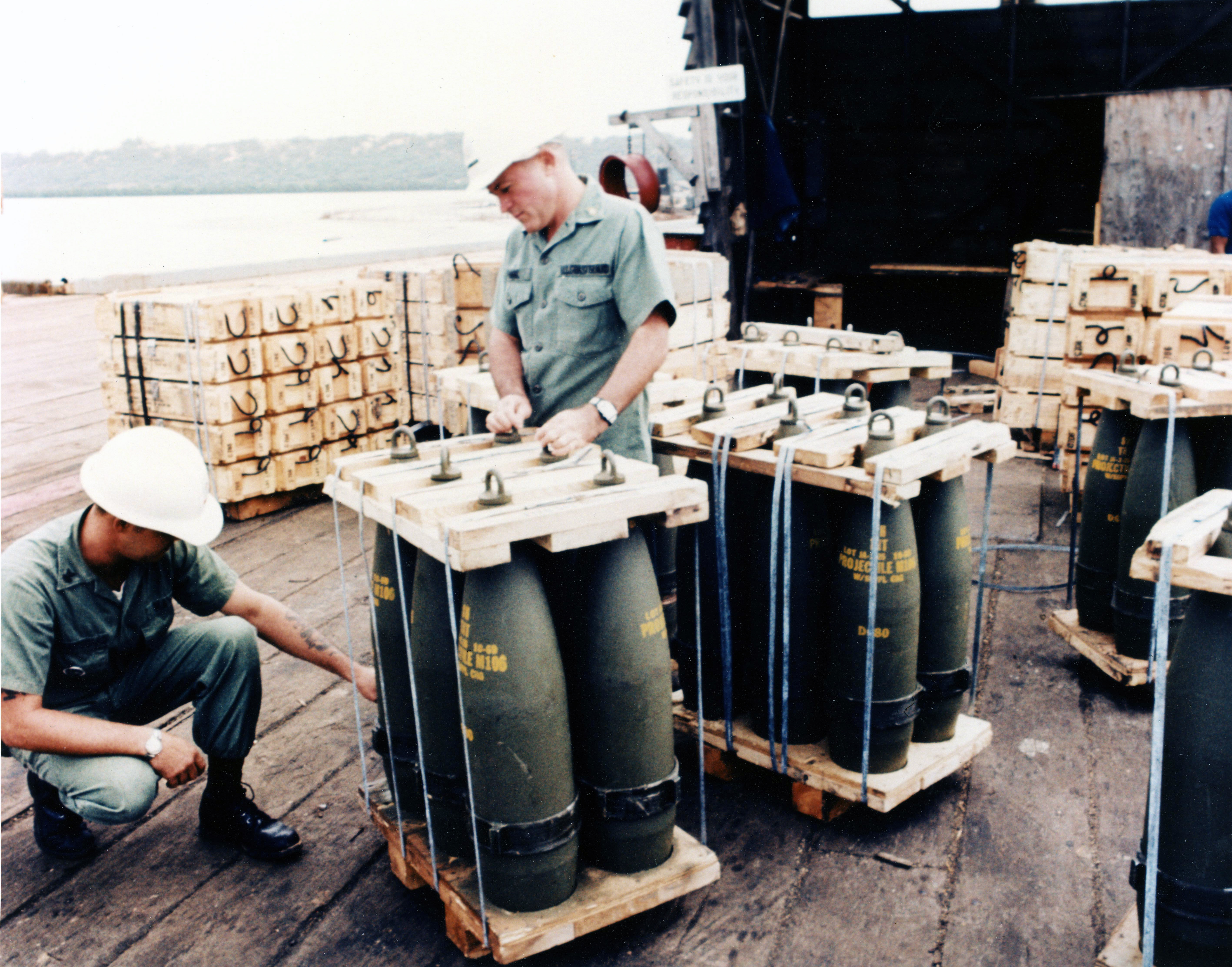
The chaotic scene engaged Army, Navy, and Coast Guard personnel returning fire. Engineman Yered knew the risks should any ordnance on the nearby ammunition barges ignite and his thoughts raced to managing that eventuality. He would not have long to wait as his Silver Star citation states: “one of the (enemy’s) rocket rounds struck a barge…and immediately ignited”.
Yered helped extinguish the barge fire without regard for personal safety. His Silver Star commendation stated, “The blazing barge threatened to destroy three other ammunition ships on which there were in excess of fifteen thousand tons of high explosives.” His citation also notes, “His courageous act averted total destruction of the ammunition ships, and the United States Army Terminal.”
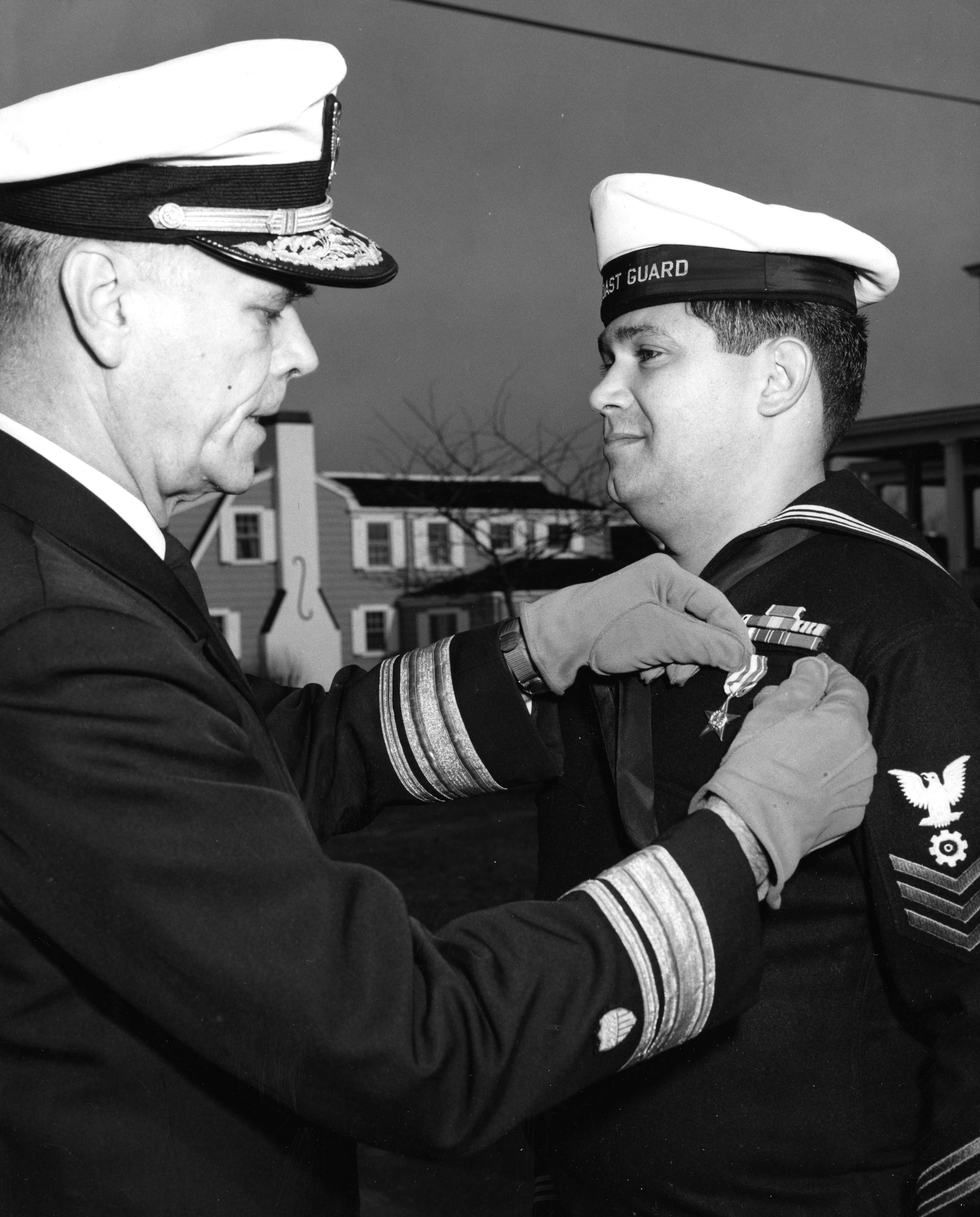
In October 1968, the Honorable John Volpe, Secretary of Transportation, presented Yered his Silver Star Medal at a ceremony in Washington, D.C. However, his war service was not over. Yered spent more time overseas and received the Vietnam Service Medal with four bronze stars, (indicating Yered participated in four of the 17 distinct Vietnam campaigns), and a Purple Heart Medal issued for wounds received during the 1968 barge attack.
Years later, the unassuming Yered was considered a namesake candidate for a $50 million dollar Coast Guard cutter. His namesake status was confirmed, and Coast Guard Cutter Robert Yered (WPC-1104) was commissioned in February 2012 and based in Miami in January 2013. Cutter Yered’s first Chief Boatswains Mate, Steve Kelly, came up with the perfect wakeup call as the Yered steamed to her new homeport in Miami. The crew heard a rap tune for their 6:00 a.m. reveille; however, Kelly said the crew had nearly selected music from the movie Good Morning Vietnam because of their namesake’s heroics in the war.
So how did a new Coast Guard cutter in 2012 come to be named for a long-passed enlistee?
In 2009, Master Chief Petty Officer of the Coast Guard Skip Bowen and Commandant Thad Allen decided how new cutters would be named. After returning from the funeral of Warrant Officer Bernie Webber, iconic hero-coxswain from the famous 1952 S.S. Pendleton rescue, Bowen suggested that the new class of Fast Response Cutters (FRCs) be named for enlisted heroes. These new cutters are equipped for security patrols, interdiction of drug smugglers and human traffickers, and search and rescue. They have a stern launching ramp that allows the deployment and retrieval of her high-speed water-jet powered pursuit boat without first coming to a stop. Their two 5,000 horsepower engines are capable of more than 25 knots, and they are armed with a remote controlled 25mm autocannon and four crew-served machine guns. Webber was the first enlisted hero to be honored as an FRC namesake.
Yered’s early mentors who encouraged him to enlist at 17—neighbors, an employer, and a school head—would have been surprised by news of his heroism. Robert Yered’s 1957 Coast Guard enlistment recommendations from neighbors, an employer and the headmaster from the Roxbury Memorial High School for Boys described an average young man in his final year of school. His artistic skills were highlighted in a few instances; however, only one recommendation by a Mr. Clifford Pearl from the school’s printing department would hint at Yered’s true potential: “I have known him and seen him mature into a well-developed gentleman with a great ability to act in the service of our country.” As glowing as these words were compared to the others’ recommendations, they would not adequately capture Yered’s contributions in a distant foreign land saving hundreds if not thousands of U.S. military personnel.
After 11 years of service, Yered received orders to an 82-foot “Point”-Class cutter stationed in Vietnam. The 82-foot cutters played an important role during the Vietnam Conflict. They were a perfect fit for near shore shallow water operations. They were built beginning in the 1960’s for coastal search and rescue and were among the first cutters less than 100 feet long to receive names rather than a hull number. Beginning shortly thereafter, cutters 65 feet and longer would receive names. In Vietnam, the 82-footers inspected vessels for contraband, intercepted and destroyed North Vietnamese and Viet Cong craft and provided fire support for friendly forces.
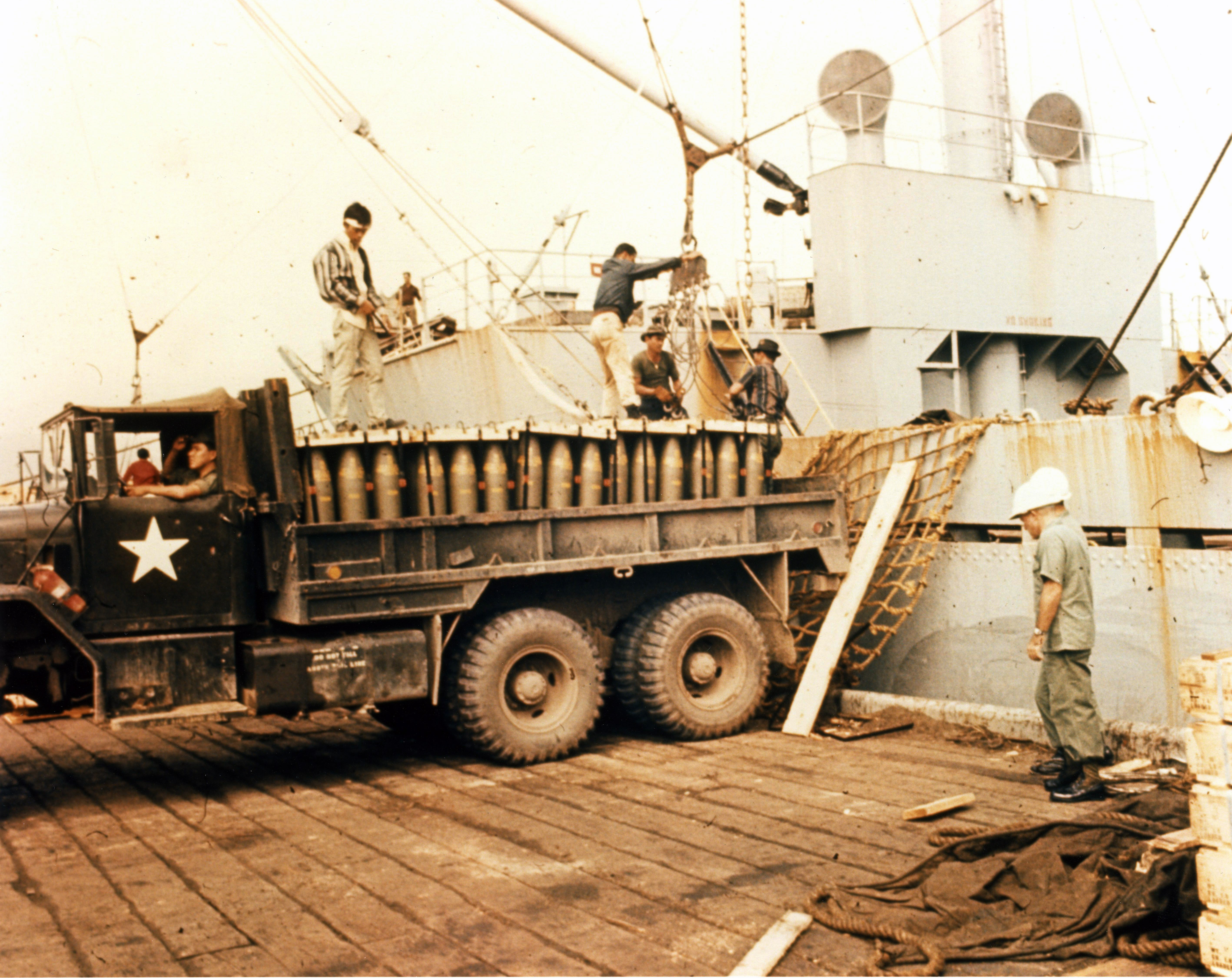
By the time Yered’s 82-foot cutter was sent overseas, he had advanced to Engineman First Class. He later received the special designator of “Dangerous Cargoman” as part of his temporary duties with Explosive Loading Detachment #1. He earned the Dangerous Cargoman certification after a week of specialized training in cargo handling and a week of field training at the service’s Port Security Station in Concord, California.
Like Yered, retired senior chief Kenneth Spoor had served in an Explosive Loading Detail in Vietnam. Serving from July 1969 to July 1970, Spoor vividly recalled the significant hazards of standing the watch at the Army cargo terminals. “Our job with the Coast Guard was to supervise the offloading of explosives because they were having too many accidents,” said Spoor. “One of our biggest worries was a swimmer attack that would put explosives under a ship, which did happen in Qui Nhon.”
After Vietnam, Yered served assignments in the Boston area to facilitate his recovery from war wounds and care for his ill wife. By this time, he had advanced to Chief Petty Officer and was assigned to recruiting duties. In fact, he was selected as “Recruiter of the Year” for Coast Guard District One which noted that, “During 1974, he [Yered] enlisted 127 people…or four times the expected national average…”
Wounds Yered suffered during the war earned him a 40 percent Veteran’s Administration disability rating. In fact, he had to petition the Coast Guard to stay in service for his last year of duty so he could receive a 20-year retirement pension. He was allowed to do so and retired on March 25, 1977, with just over 20 years’ service.
.jpg?ver=3iLky991m8Nj4YHffj_klQ%3d%3d "Cutter Yered’s official coat of arms. (DVIDS)")
After retiring, Yered fought a small administrative battle with the Coast Guard to receive an “increase of 10 percent of his active retirement pay for good conduct,” pursuant to Title 14 USC 357. In April 1977, his request was initially denied, deeming him “not entitled to ten percent increase in pay by reason of his average marks during his service that did not meet the minimum requirement.” Once again, Yered’s humble nature during peacetime stymied this initial effort. Later, interested parties prevailed and, in June 1977, the Coast Guard Medals & Awards Branch determined that Yered had been “cited for extraordinary heroism” and his request should be approved.
Yered’s retired life would see him live quietly with his wife in Millis, Massachusetts. He passed away on January 26, 2009, and was interred at St. Mary’s Cemetery in Needham.
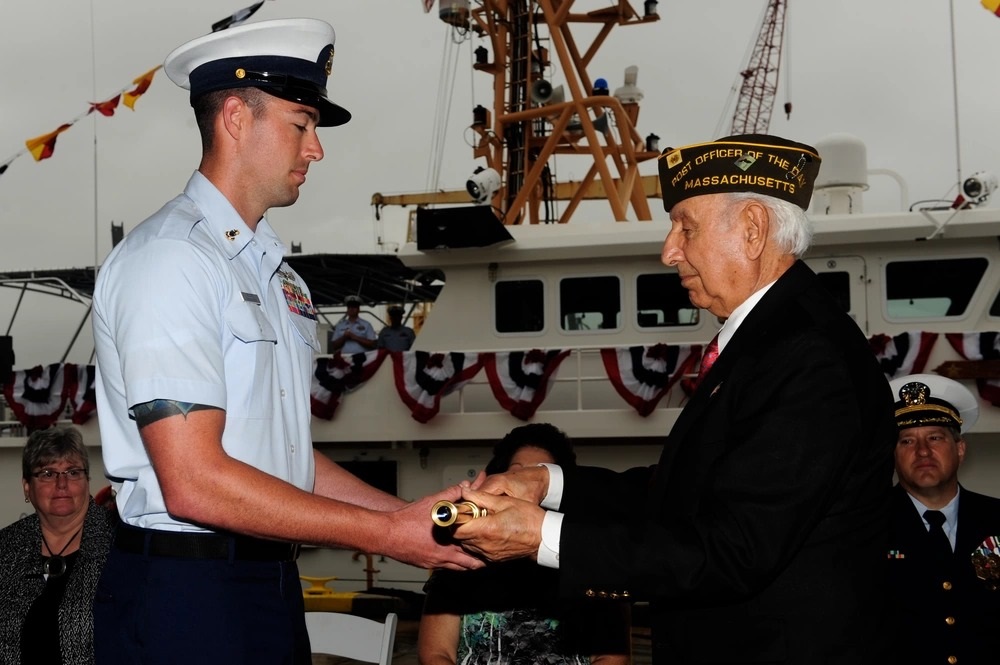
More than 8,000 Coast Guardsmen served in Vietnam with 59 wounded and seven killed in action. Many more Americans would have died were it not for the actions of the quiet man from Massachusetts. Yered’s daughter, Lori Geddis, said it best, “My father was proud and private and never really talked about Vietnam to us. I hope he would be proud of this. He was never the kind of person to have the attention on him. But a lot of people respected my father and I think people will try to live up to his expectations. Even after he left the Coast Guard, he was a groundskeeper at a high school and his fields were perfect.”
About the Author: Captain Webster is a graduate of the Coast Guard Academy and honored as its 2017 Distinguished Alumni. The Foundation for Coast Guard History recognized him in 2012 for his more than 30 years of Coast Guard writing. He is a maritime historian and author of contemporary Coast Guard rescue stories. He lives with his wife, Theresa, in Plymouth, Massachusetts. His work may be found on the website https://www.wrussellwebster.com including his 2025 book New England’s Lifesaver: Coast Guard Legend Master Chief Jack Downey. He is currently working on a new book honoring Fast Response Cutter namesakes.
-USCG-