Prelude to War
The Korean War is considered the “forgotten war” by some historians; however, it made a permanent mark on the Coast Guard. For example, the Coast Guard shrank dramatically after World War II, but it still retained its wartime global footprint, never again serving just domestic maritime missions. The Korean War was a case in point. In addition, the Korean War altered the service’s relationship with the U.S. Navy from its World War II role. Beginning with Korea, the Coast Guard served independently from the Navy continuing its peacetime missions in support naval operations. The Coast Guard would never again become a branch of the Navy in time of war.
.png?ver=RR4tm-F9rGbF9EZCtpClHA%3d%3d "Members of the Coast Guard advisory unit stood up to help establish a South Korean coast guard later turned navy. (U.S. Coast Guard)")
Korean Coast Guard
U.S. Coast Guard involvement in Korea began even before the Korean War. As part of the United Nations Trusteeship agreement, the U.S. established government institutions in the south. One institution deemed essential by the U.S. was a Korean coast guard. In September 1946, “U.S. Coast Guard Detachment, Korea” was formed when eight Coast Guard officers and seven enlisted men arrived in Seoul to create a Korean coast guard. The training program they developed with South Korean counterparts aimed to equip a domestic coast guard with the skills to prevent smuggling and manage seaborne commercial traffic—two vital functions for the economy. Coast Guard Captain George McCabe was appointed as the commanding officer of the unit and temporary head of the new Korean Coast Guard. By 1947, the Korean Coast Guard had established an academy; Korean officers had taken command of the service with McCabe serving as advisor; it had launched 19 new vessels, built operating bases and established a communications network.
Following general elections in 1948, the Republic of Korea was formed, and the Korean Coast Guard merged into the Korean Navy. At that time, the Coast Guard’s advisors ended their mission, but several of these officers retired from the Coast Guard to serve as civilian advisors to the South Korean Navy. They helped establish the Korean Naval Academy and enlisted training programs right up until the North Korean invasion of the south. This training mission was the first of countless Coast Guard international training missions in the years to come.
War Breaks Out
On June 25, 1950, soldiers of North Korea’s People’s Army crossed over the 38th parallel, moving into South Korea to start what would become the Korean War. As the U.S. military responded to the invasion, it realized the Coast Guard had many unique capabilities necessary to support the war effort.
Ocean Stations
At no time did cutters serve in combat, however, one of the most important Coast Guard contributions to the conflict was the operation of cutters on Ocean Station. This mission was rooted in a program established just before World War II and constituted perhaps the most direct Coast Guard contribution to the war effort. Coast Guard cutters at designated “Ocean Stations” patrolled a ten-square-mile “box” in the ocean and gathered daily meteorological data. The weather data informed the military’s operational commanders on the Korean Peninsula as well as naval vessels and cargo ships delivering war material to the Korean theater. The Ocean Station cutters also served as communication relay stations for aircraft on transoceanic flights; provided seaborn medical services; and operated as search and rescue platforms.
Initially, the Coast Guard supplied cutters for two stations, but at the request of the Navy, that was expanded to five stations across the Pacific and around the Korean Peninsula. To meet the demands of this assignment, the Coast Guard commissioned 12 mothballed Destroyer Escorts as cutters and outfitted them with depth charges and anti-aircraft weapons.
In all, 24 cutters served on Ocean Station duty within the Korean conflict’s perimeter. The Navy’s decision that the Coast Guard serve its regular peacetime missions dictated that cutters remain painted white and not haze grey. Ninety-five percent of war materiel and nearly half of all personnel reached Korea by sea or air, so these cutters became a crucial logistical link in the military’s operational chain.
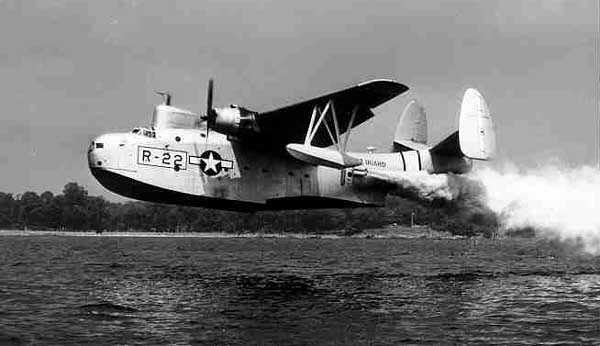
AIRDETs
The Coast Guard made significant contributions to aerial search and rescue in the Pacific theater. Before the Korean War, new aviation detachments, or AIRDETs, were established in Hawaii, Guam and the Philippines, with later ones established during the war at Wake and Midway islands. During the war, both new and existing AIRDETs were fortified with additional aircraft and personnel to conduct round-the-clock operations. These AIRDETs were part of a larger global network of Coast Guard AIRDETs extending from Europe across the globe to the western Pacific.
Port Security
Another wartime mission the Coast Guard executed was port security. With the Soviet Union supporting North Korea, concerns mounted about the possibility of communist sabotage, particularly in U.S. ports loading equipment and supplies for the Korean theater. President Truman signed an executive order activating the Magnuson Act and tasking the Coast Guard with guarding U.S. ports.
 Richey.jpg?ver=KxFX1RNDohHhmzNq4VDvig%3d%3d "Former World War II destroyer escort Richey converted to a Coast Guard cutter for Ocean Station duty. Notice depth charge racks and plentiful anti-aircraft armament on this heavily armed cutter. (U.S. Coast Guard)")
Coast Guard Reserve
The immediate problem with implementing new port security duties was the lack of personnel. After the end of World War II, the Coast Guard had no organized reserve program to speak of. As an emergency measure, President Truman approved the financing for an organized Coast Guard reserve. He also gave the Coast Guard the authority to extend for a year all enlistments that would have terminated in fiscal year 1950. As a result, the service’s workforce doubled in size compared to its pre-Korean War personnel levels.
The Port Security mission involved many security measures. These included security screenings for merchant sailors, longshoremen, and harbor pilots. They also included inspecting all suspicious commercial vessels. Military strategists deemed a Soviet-bloc freighter sailing into a U.S. port with a nuclear device as a legitimate risk, so Coast Guard boarding teams employed devices, such as Geiger counters to detect atomic, explosive, or bacteriological weapons. The Coast Guard also formed explosive loading detachment teams to supervise the safe loading of ammunition onto merchant vessels. Over the course of fiscal year 1952 alone, the Coast Guard screened more than 360,000 long shoremen and seamen, boarded nearly 40,000 vessels, and oversaw over 750 high-explosives ship loadings with no instances of sabotage or serious accident.
LORAN
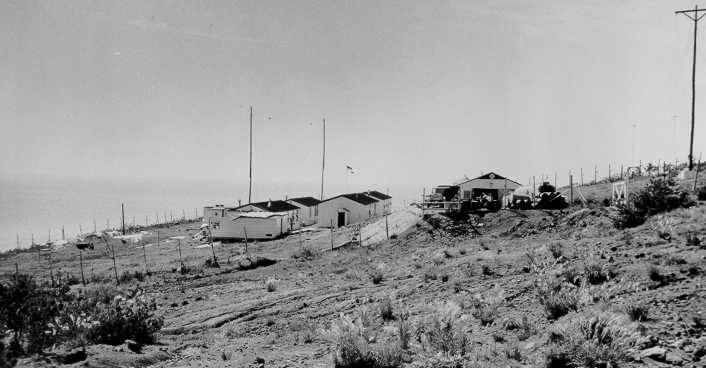
The Coast Guard performed one other peacetime mission in the combat zone. The service extended its global Long Range Aids to Navigation (LORAN) network. This system provided precise all-weather navigation for ships and aircraft around the world. Prior to the war, the Coast Guard had no LORAN coverage for Korea, so it was vital to establish a station on the Korean Peninsula. Begun in June 1952, LORAN Station Pusan began transmitting in January 1953 providing 24/7 all-weather navigation to United Nations’ maritime, naval and air forces around Korea.
Conclusion
When the war’s cease-fire was signed on July 26, 1953, the Coast Guard did as it had always done following armed conflicts – it quickly demobilized. The war was part of a global struggle and the service’s ability to expand quickly and operate throughout the Pacific demonstrated the importance of the Coast Guard as a U.S. military branch in time of war.
The Korean War demonstrated the service’s importance in other ways. Before the conflict, the Coast Guard began a decades long tradition of training foreign sea services in the Coast Guard’s mission sets. The demands of the Korean War cemented the service’s port security specialty, which has remained an important part of the service’s mission set. The wartime requirement to double the size of the service’s workforce established the Coast Guard Reserve as a permanent part of the service. The war also normalized the concept of the Coast Guard serving as a separate military branch in time of war. This tradition became the norm for all future conflicts, and the Coast Guard has served in every one of them.
-USCG-