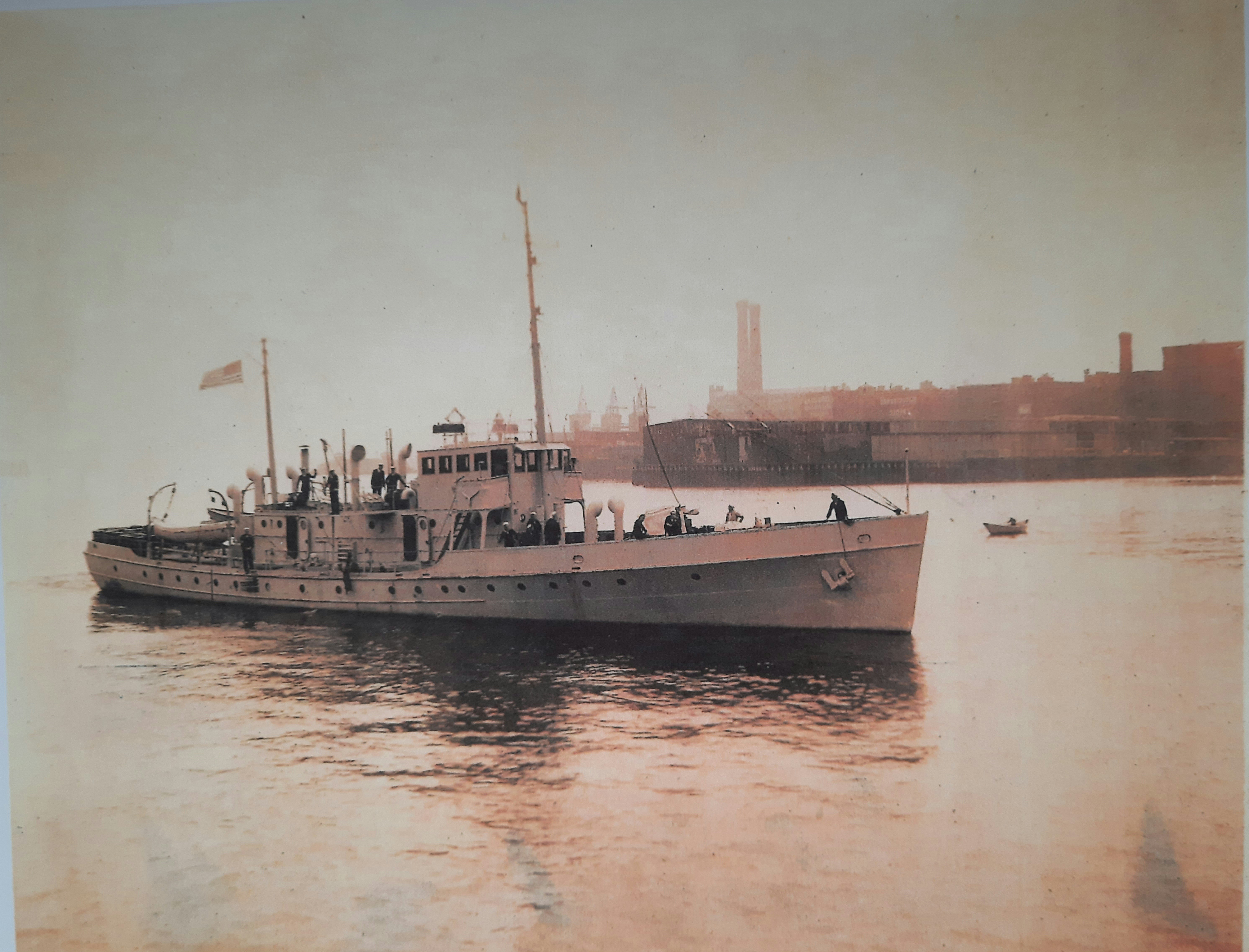
 In the summer of 1928, the Coast Guard Cutter Marion (WSC-145) departed Boston for the Davis Strait, Baffin Bay, and the west coast of Greenland. Under the command of Lieutenant Commander Edward “Iceberg” Smith, the cutter’s mission was to apply Smith’s oceanographic surveying methods to better understand the origination of North Atlantic icebergs and the ocean currents and environmental conditions that propelled their travels south—where they eventually endangered the shipping lanes between Europe and North America.
Over course of 73 days, the Marion cruised 8,100 nautical miles—farther than the distance from New York to Sydney, Australia. The survey covered 450,000 nautical square miles of ocean lying between Greenland and North America. Marion’s crew completed 191 oceanographic stations, at which approximately 2,000 observations of temperature and salinity were recorded. The vessel’s fathometer registered 1,700 depths for chart record, vastly improving navigational knowledge in the region. At the time, the Marion expedition was the most comprehensive oceanographic study ever undertaken by the United States. Smith’s research established the Coast Guard as an international authority on iceberg formation and migration, dramatically improving the efficiency of the Coast Guard’s International Ice Patrol mission.
Equally important, Marion’s port visits in Greenland included meetings with local Danish authorities and social interaction with native Inuit Greenlanders. Twelve years later, the knowledge gained during the Marion Expedition helped prepare both the Coast Guard and Smith for their essential roles in the defense of Greenland during World War II.
Iceberg Smith
Born and raised in Vineyard Haven, Massachusetts, Edward Hason Smith descended from a long line of whalers. From a young age, he was well versed in sailing, shipping, and maritime life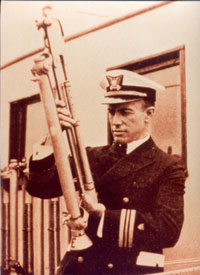 .
.
Smith received a cadet appointment to the U.S. Revenue Cutter Service School of Instruction in 1910. He graduated and was commissioned an ensign in May 1913. During World War I, he served as navigator on Cutter Manning in the U.S. Navy’s Atlantic Patrol Force, escorting convoys between England and Gibraltar.
After the war, Smith was assigned to Cutter Seneca as the International Ice Patrol’s first scientific observer, an assignment that launched his long career in oceanographic research. Because of Smith’s focus on ice and early work with the International Ice Patrol, his peers nicknamed him “Iceberg,” and the moniker stayed with him for the rest of life.
Smith participated in ice patrol cruises in the ice regions off Newfoundland every winter and spring from 1920 to 1924. Under the supervision of instructors in oceanography and meteorology at Harvard University, he spent each offseason compiling, analyzing, and chronicling the scientific information gathered during the ice-reconnaissance cruises. To hone his understanding of the technical methods essential to his research, Smith spent 1925 at the Geophysical Institute in Bergen, Norway, and a few months at the British Meteorological Office in London. He returned to the Ice Patrol for the 1926 and 1927 ice seasons. In addition to continuing his research work, he pressed for a dedicated scientific cruise to points farther north. His hopes came to fruition with the Marion expeditions in the summer of 1928.
The Cutter Marion
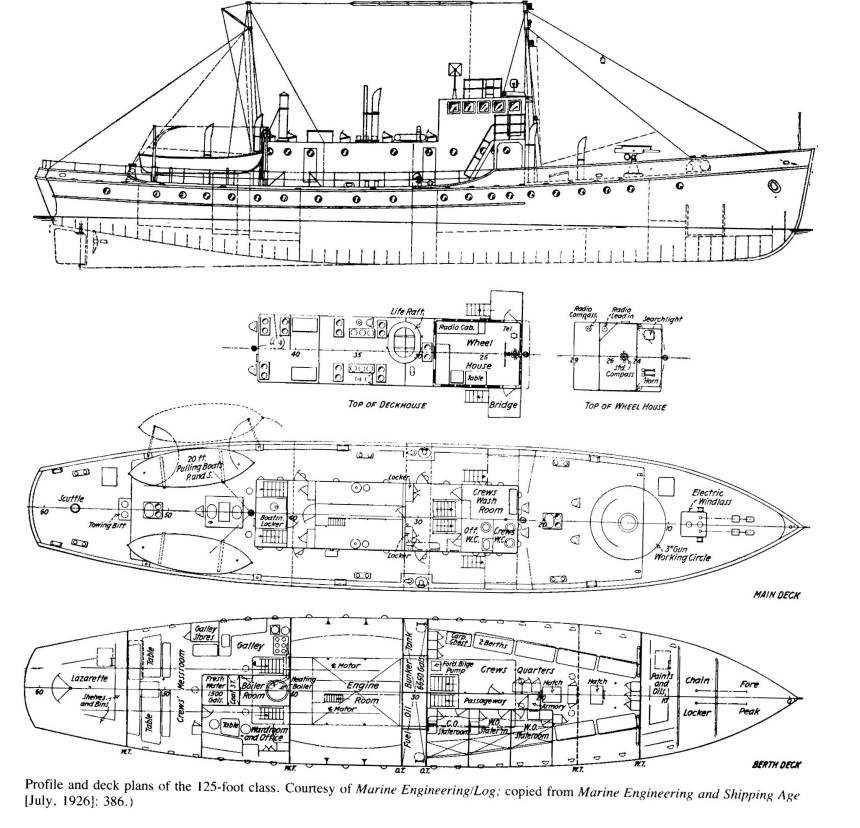 Marion was an Active-class patrol boat. Like her 32 sisterships in the class, she was 125 feet long with a 23 ½-foot beam and 8 ½-foot draft. Originally built to win the “Rum War” of Prohibition, the class was widely known in the service as “buck-and-a-quarters.” The cutters quickly gained a reputation for durability and seaworthiness.
With minimal modification, the Marion could quickly be made ready for the expedition. The most significant change was the installation of a platform extending over the starboard side just aft of the bridge to accommodate the oceanographic work. Other extra items of equipment installed included a radio compass, short-wave radio, two oceanographic winches, an electric salinometer, a fathometer, several extra banks of batteries, and special generators needed to power the additional equipment.
Marion’s twin screws, each driven by a six-cylinder, 150 horsepower diesel engine gave her a maximum speed of 10 ½ knots. During much of the early part of the cruise, Marion ran on a single screw to save fuel. To further extend her range, extra drums of fuel oil were carried on the fantail. The vessel’s twin screws also made it easier to hold station when conducting oceanographic work.
Marion’s galley stove and boiler were coal-fired, so bags of coal and nonperishable food supplies were stored wherever space allowed. Fish and wild game supplemented the crew’s diet. The ship only had a 1,500-gallon water tank, so additional drums of water used for washing clothes and the like were stored on the fantail with the petroleum drums. During the cruise, additional fresh water was taken onboard the old-fashioned way: by bucket brigade from a nearby stream. Farther north, chunks of icebergs were melted to fill the water tanks. The Marion carried a three-inch main gun, which proved valuable for saluting Danish officials during the cutter’s Greenland port calls.
The Crew
Marion was designed for a complement of three warrant officers and 18 enlisted men. To accomplish the extra oceanographic work, the crew was expanded to two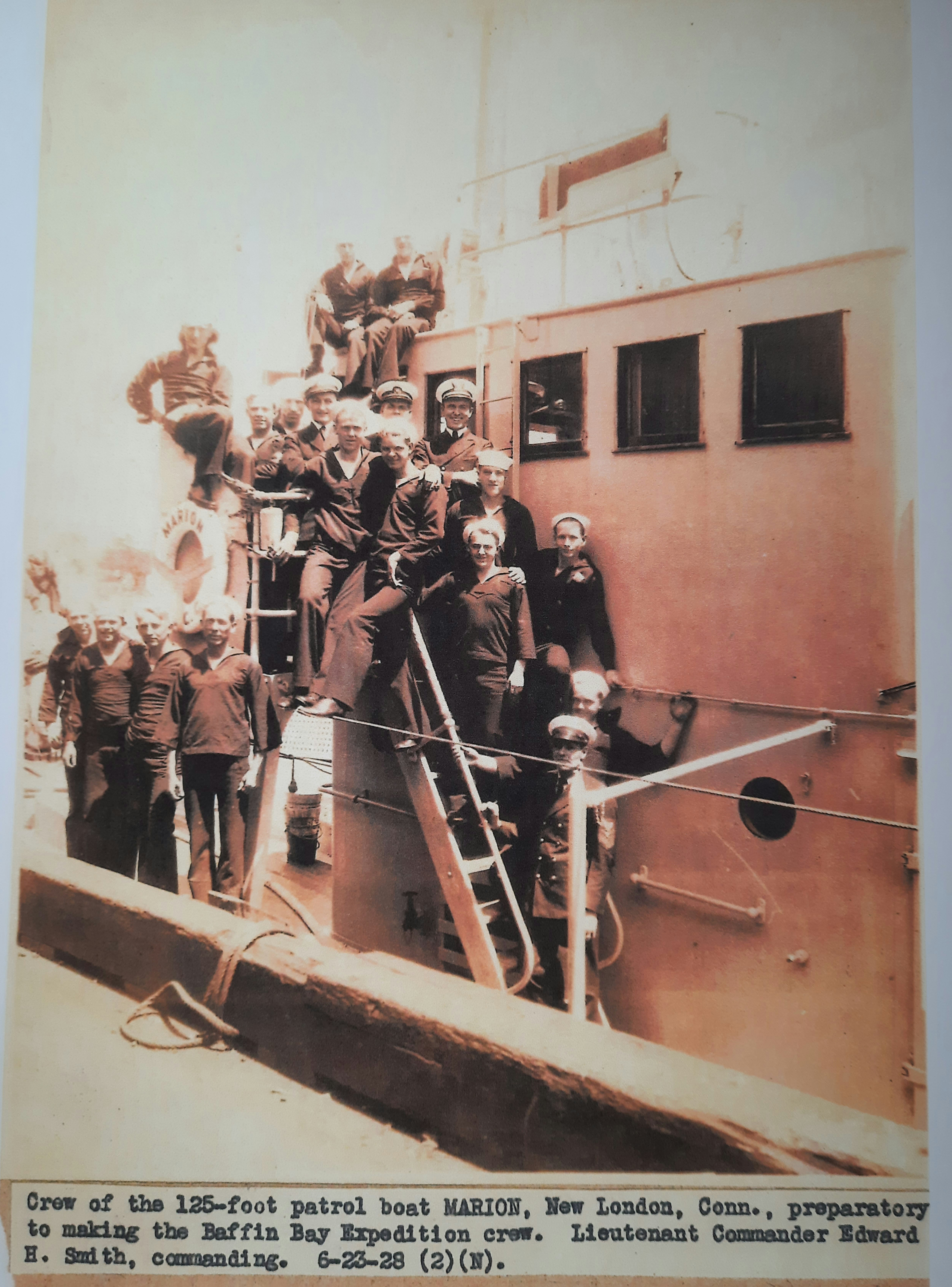 commissioned officers, two warrant officers, and 23 enlisted. By standards of the time, the crew accommodations were considered spacious. Additional bunks were added in the berthing areas to accommodate the larger crew. For those without a bunk, hammocks were swung in the crew’s mess room at night. The cutter’s executive officer, Lieutenant Noble Ricketts, was successor to Iceberg Smith as the International Ice Patrol scientific observer and had just completed the 1928 ice season. He volunteered to accompany the expedition as second in command even though he had just come ashore from three months without sight of land. Ricketts was undoubtedly the key to the success of the expedition.
The Expedition Begins
Marion departed from her homeport of New London, Connecticut, on July 7, 1928. After a brief port call in the commanding officer’s hometown of Vineyard Haven, the cutter proceeded to Boston Navy Yard to complete final fit-out, then continued to Halifax, Nova Scotia, arriving the evening of July 13th. After acquiring a few British Admiralty charts and final items of equipment, Marion sailed to Sydney, Nova Scotia, where she loaded fuel and fresh commissary stores, and all hands sent letters home before departing on their Arctic adventure. From there, it was off to the western shore of Newfoundland and passage through the often-treacherous Strait of Belle Isle. Arrival at the Atlantic end of the Strait marked the start of rigorous oceanographic research.
Oceanographic “Stations”
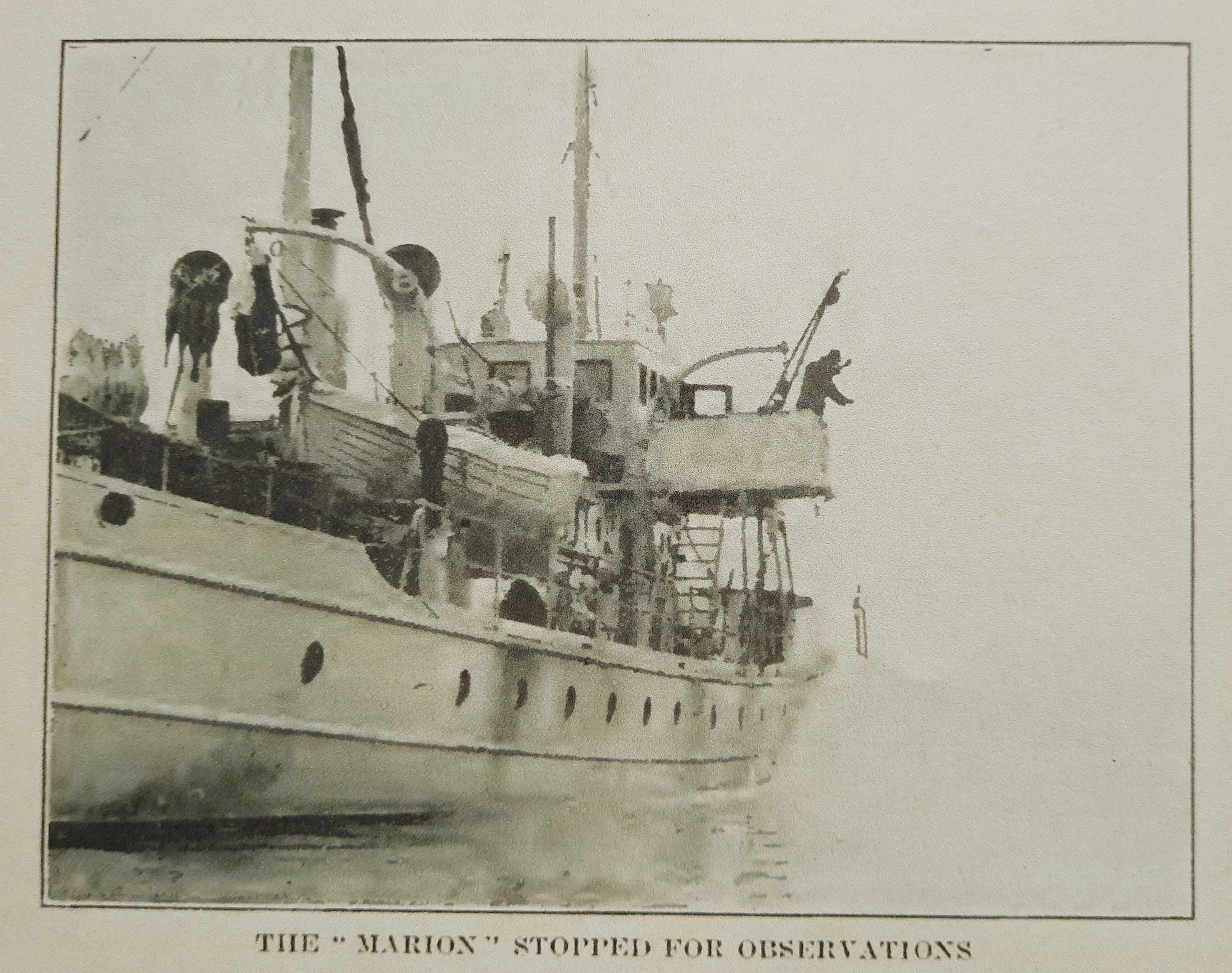 Marion’s primary mission was to gather accurate data essential to understanding the waters between Labrador, Baffin Island and Greenland. In addition to fathometer readings, oceanographic observations were taken at a series of “stations” along the vessel’s travels.
Temperature and salinity information was gathered by rigging a series of Green-Bigelow water bottles and reversing thermometers at specific intervals on a wire cable as it was lowered to the sea floor. To take a sample, a small brass weight called a “messenger” was sent down the wire. When it struck the topmost bottle, it triggered a mechanism to flip the bottle upside down. This closed the valves at each end to trap a water sample. A new messenger was released from the now-inverted bottle, which slides down the wire to trigger the next bottle below it. This created a chain reaction that collected samples at each desired depth. A pair of mercury-in-glass thermometers—one protected from pressure and one unprotected—was attached to each bottle. When the bottle inverted, the thermometer also flipped, which broke the mercury column at a constriction in its capillary. This preserved the temperature reading from that depth. Comparing the readings from the protected and unprotected thermometers allowed scientists to calculate the pressure and confirm the depth at which the sample was taken.
Greenland Bound
After topping off the water tanks from a stream in Battle Harbor, Labrador, the Marion made its first long run of stations across Davis Strait to the west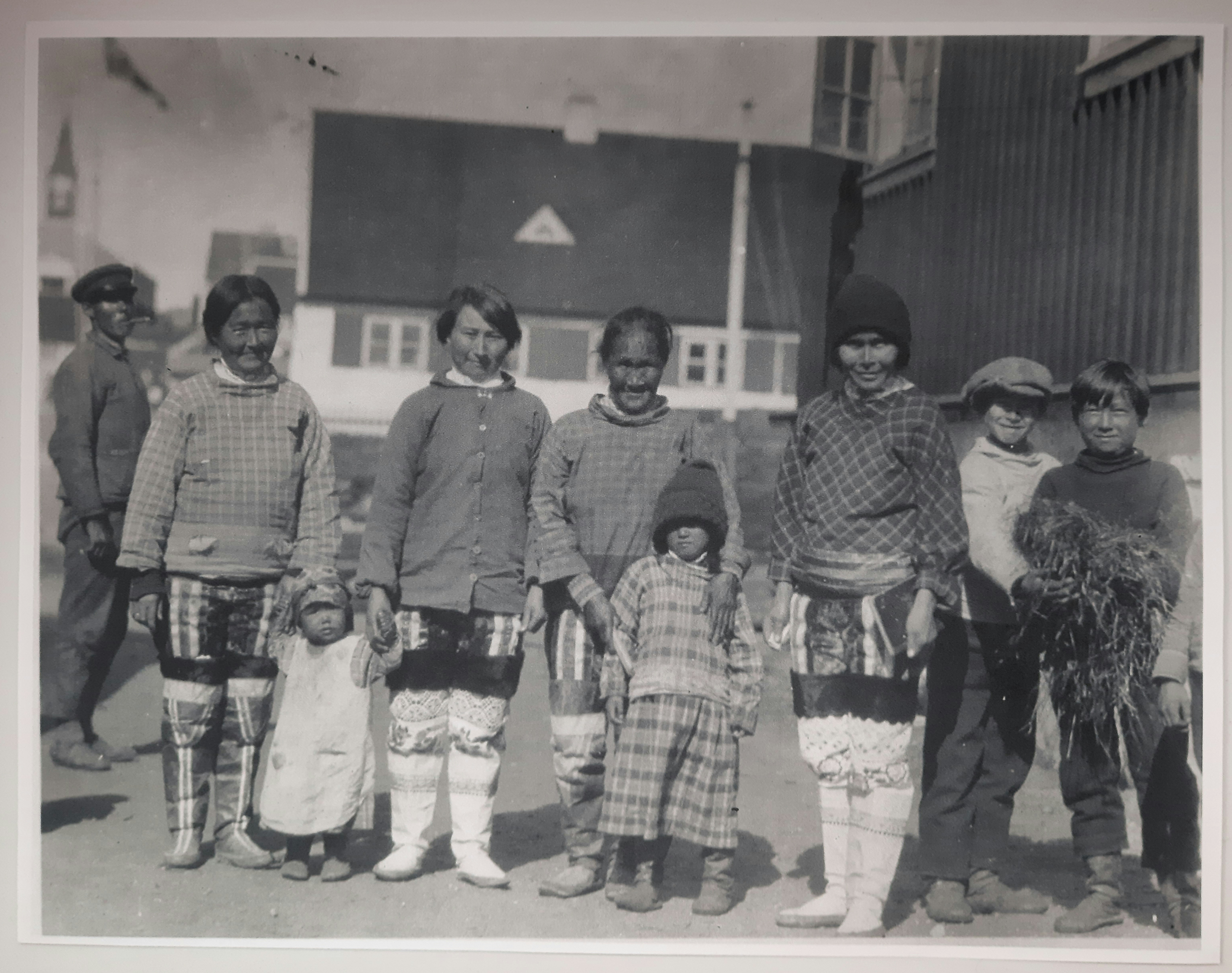 coast of Greenland.
On July 31st, Marion prepared for its first port call, at Godthaab, Greenland. After firing a 21-gun salute and receiving clearance from the local Danish officials, Marion anchored in the harbor. Official visits were exchanged and liberty was granted. The crew enjoyed the first of several community dances organized by the Greenlanders during Arctic port visits.
After departing Godthaab on August 1st, Marion executed several long runs of oceanographic stations in the Davis Strait and along the coast of Greenland before heading to Disco Bay and a port call in Godhavn. As in Godthaab, the crew received a warm welcome from the locals. Smith was pleasantly surprised to learn that he could acquire 1,400 gallons of good diesel fuel in addition to fresh water and other supplies. The additional fuel would allow Marion to visit the iceberg producing glaciers on the eastern side of Disco Bay and complete the projected oceanographic program without danger of fuel shortage.
Visiting the Birthplace of Icebergs
On August 8th, Marion departed for Jacobshavn, firing a 21-gun salute as she departed Godhavn harbor. The crew was joined by Dr. M.P. Porsild, director of the Danish Arctic Station at Godhavn. During the cruise around Disco Bay, Porsild shared a wealth of knowledge about the area and Greenland as a whole. In the words of Lieutenant Rickets,
He was a mine of local information, and his patient replies to innumerable questions as well as tales about the life of Government agents, visiting scientists, and natives, were listened to with great attention. Through his kindness our almost complete ignorance of the country was gradually dispelled, and we began to appreciate the true character of the land we were privileged to visit.
Meanwhile, Marion finished a row of stations to the berg-chocked entrance to Jakobshavn fjord. The crew was astounded by the 500-plus icebergs sighted in Disco Bay, the tallest of which was 265 feet high. Marion anchored in Jakobshavn harbor at 11:20 p.m. on 8 August 8th. The next morning, nearly the entire ship’s company made the trek northeast to view the fjord and the iceberg-calving glaciers. The next day, Marion sailed farther north, anchoring near the south end of Ekip-Sermia Glacier where the crew witnessed firsthand the dramatic swell and thunderous noise of a calving iceberg.
The Marion Expedition Monument
After additional exploring ashore, several members of the crew requested permission to erect a monument at Port Quervain to mark the northernmost point visited by a Coast Guard vessel on the eastern side of North America. A written record was wrapped in weatherproof covering and placed in a large rock cairn constructed by the crew on a prominent hill. It was topped with a three-inch brass cartridge casing inscribed with “Marion Expedition, 1928.”
Sea Ice and Polar Bears
 After a few more brief port visits in and around Disco Bay, Marion returned to Godhavn to take on fuel, water, and supplies, including fresh seal and whale meat. The officers had dinner at the Danish Arctic Station, where they had an opportunity to explore the library and museum. Later, they attended a soccer match between the crew and the locals—the Coasties were no match for the Greenlanders, losing 26 to zero. Marion then began a long series of oceanographic stations to the southwest, hoping to reach Cape Dier on Baffin Island. The sea ice stopped the vessel short of its goal, but several stations were completed while drifting with the ice.
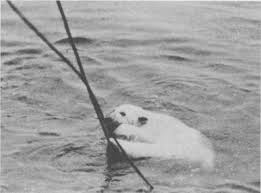
A large polar bear and two cubs were spotted on a nearby ice cake. The large bear and one cub were killed for food; the second cub was captured and place in the forward hold. The bear was promptly and appropriately named “Marion,” and a plan hatched to take her back to the U.S. for the National Zoo. However, just before the ship left the pack ice the captive bear escaped. All hands set themselves to recapture her, and it was quite a fight, but she was eventually returned to the hold. A strong cage was constructed, and Marion the bear finished the cruise on the fantail wedged among the oil drums.
The Stretch Run
Over the course of the next month, Marion completed a line of stations to the mouth of Hudson Bay, then east back to the coast of Greenland, and from there south to Cape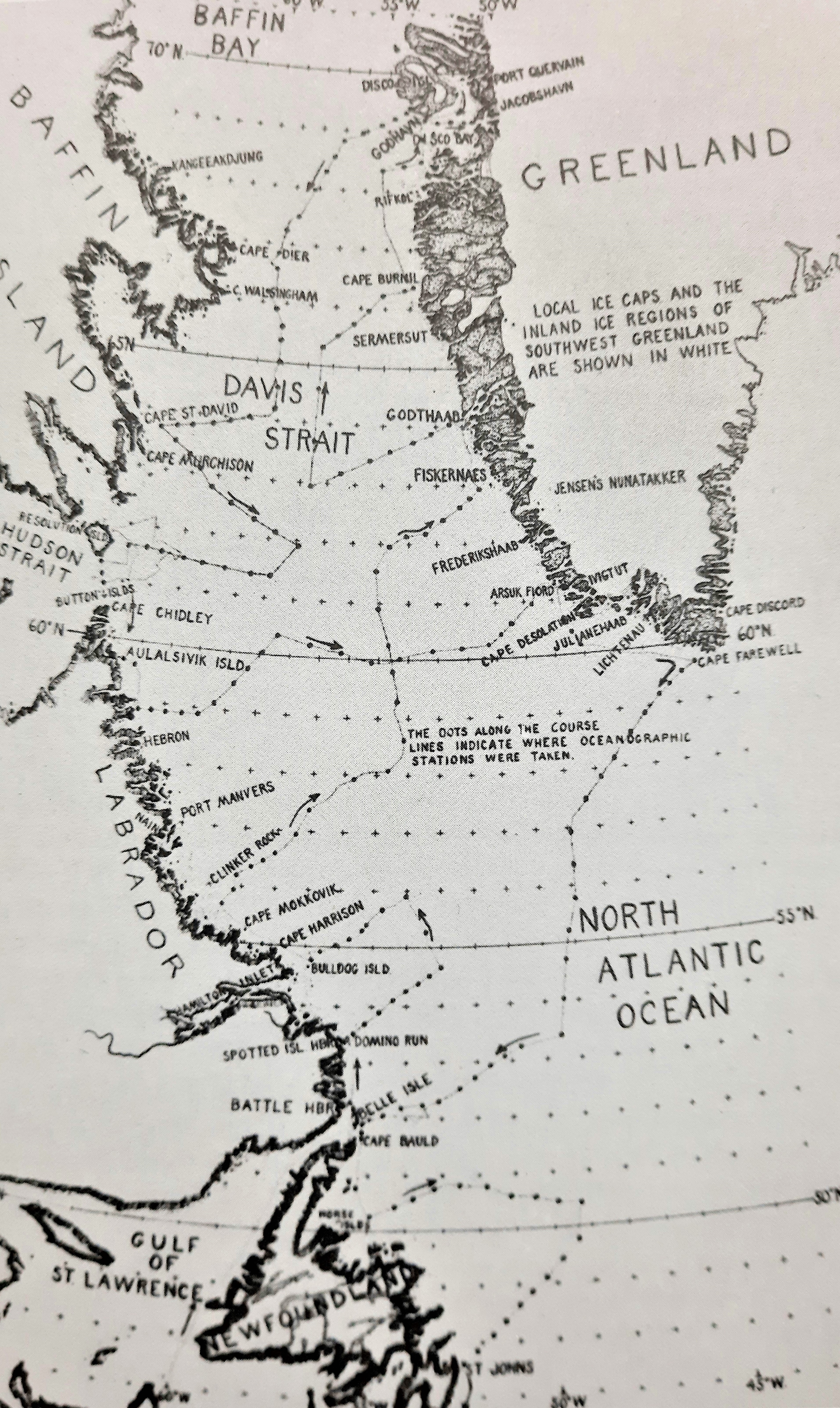 Farewell at Greenland’s southern tip. Along the way, the crew visited several more glaciers and the cryolite mines at Ivigtut. From Cape Farewell, a long line of oceanographic stations was taken across the Labrador Sea to Belle Isle. The final line of stations ran southeasterly, ending at St. John’s, Newfoundland.
After a brief one-day port call in St. John’s, where polar bear Marion proved to be center of attention—Cutter Marion and her very tired crew headed for home. Marion moored at State Pier in New London, Connecticut, at 6:25 a.m. on September 18, 1928. The intensive 73-day cruise to the Arctic had ended successfully.
Marion the polar bear, in the well-strengthen cage, was shipped by express to the National Zoo in Washington, D.C., where she would live out her life, becoming a very popular attraction, especially with young children.
Results of the Expedition
The observations and data from the Marion expedition were compiled and published in three volumes. In addition to bathymetry and sediment data, Part 1 includes Lieutenant Ricketts’s narrative chronicling the details of the expedition. It reads like a well-written travelogue—both fascinating and entertaining. The reader comes away with a true appreciation for the dedication and ingenuity it took to complete the mission. Parts 2 and 3 cover Physical Oceanography and Arctic Ice, respectively.
World War II Greenland Patrol
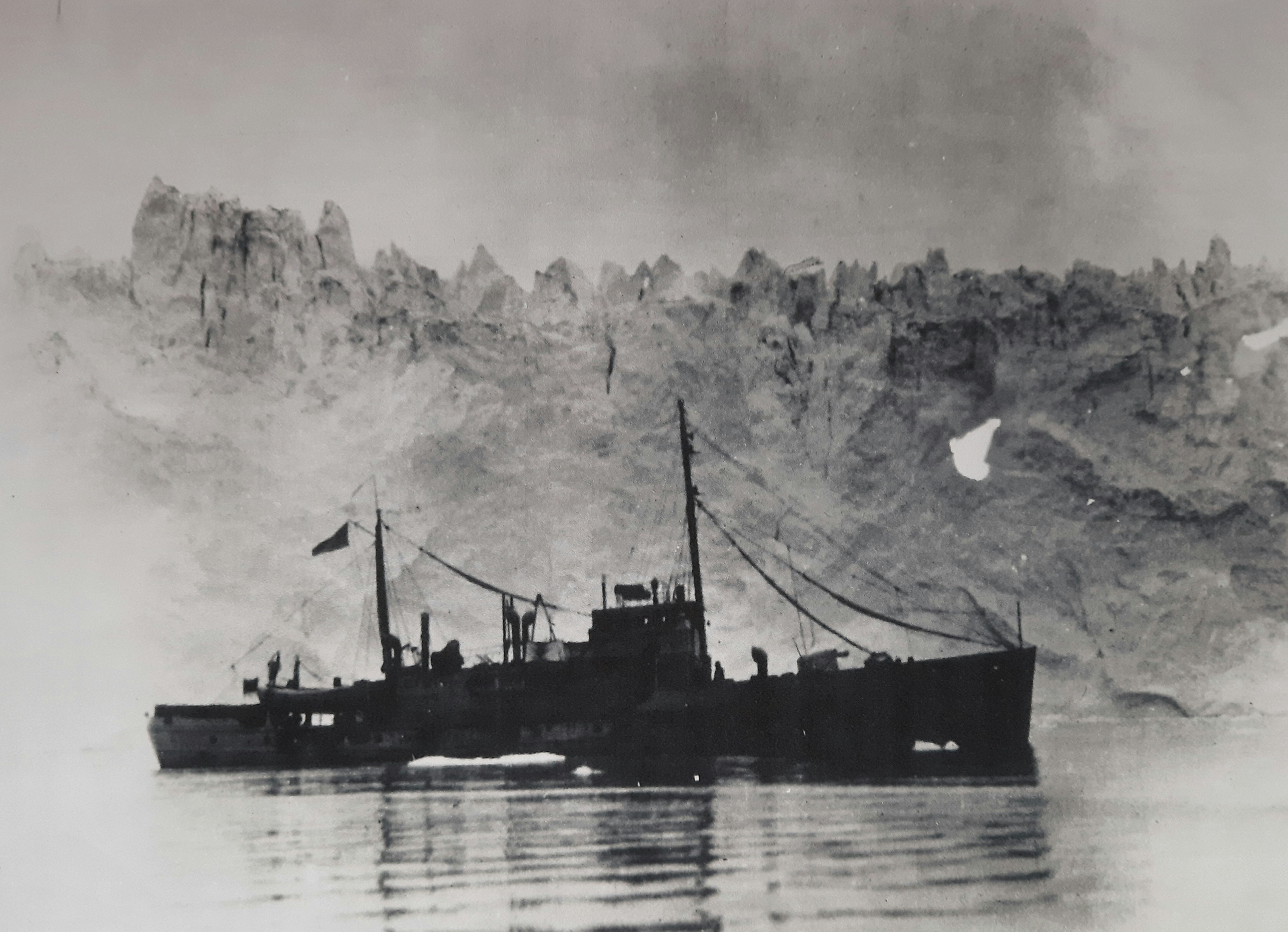 Twelve years after the Marion expedition, the Coast Guard and Iceberg Smith would find themselves on point as the United States prepared to defend Greenland. The Marion expedition, and additional cruises that followed it, had forged invaluable relationships and created a cadre of cuttermen intimately familiar with Greenland waters and the challenges of operations in and around sea ice.
When Germany invaded Denmark on April 9, 1940, the Danish colony of Greenland became strategically important. In June 1940, Smith was assigned as commanding officer of Cutter Northland. He also assumed duty as commander of the Greenland Patrol, which was responsible for Ice Patrol duties and assisting the Army and the Navy with establishing bases for the defense of Greenland. Scientific research in support of the Ice Patrol provided diplomatic cover for Coast Guard cutters operating in and around Greenland. On April 9, 1941, U.S. Secretary of State Cordell Hull and Danish Ambassador Henrik Kauffmann signed an agreement that made Greenland a protectorate of the United States.
Rear Admiral Edward “Iceberg” Smith eventually found himself in command of the Greenland Patrol and Navy Task Group 24, with responsibility for naval operations between Iceland and Newfoundland. He knew the waters well.