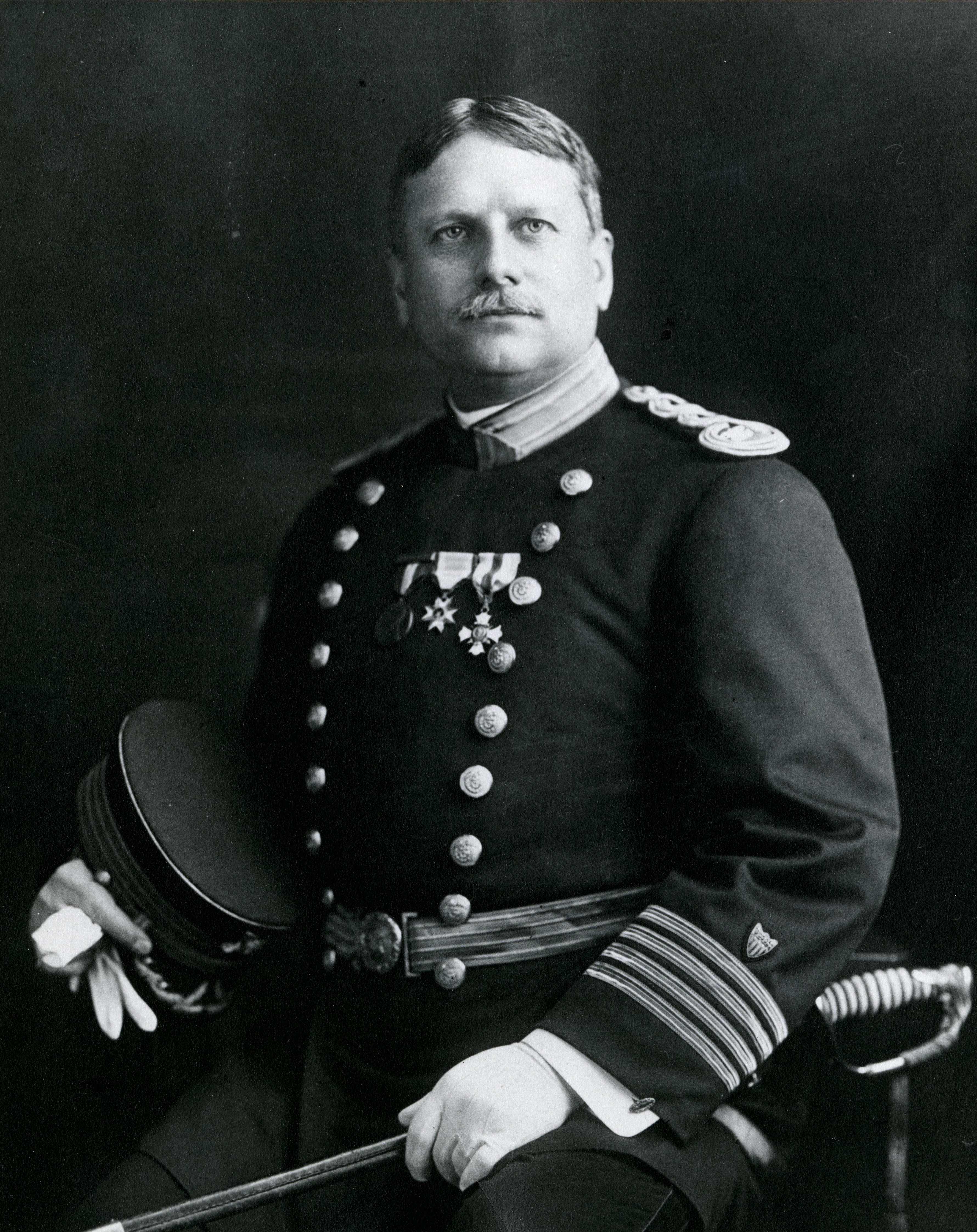
 In July 1876, Congress adopted a measure to appoint cadets to fill vacancies which occurred in the line. The text of the law is as follows: That hereafter, upon the occurring of a vacancy in the grade of third lieutenant in the Revenue Marine Service, the Secretary of the Treasury may appoint a cadet, not less than 18 nor more than 25 years of age, with rank next below that of third lieutenant, whose pay shall be three-fourths that of a third Lieutenant, and he shall not be appointed to a higher grade till he shall have served a satisfactory probationary term of two years and passed the examination required by the regulations of said service; and upon the promotion of such cadet another may be appointed in his stead, but the whole number of third lieutenants and cadets shall at no time exceed the number of third lieutenants now authorized by law.
The object of this bill is to educate young men for officers. Any individual of the above qualifications who can furnish satisfactory evidence of good moral character, correct habits, and who meets the requirements of the regulations as to physical soundness and conditions, can compete in the examinations that take place annually at the Treasury Department to fill vacancies. Appointments are not influenced by political considerations or favoritism but are made strictly on the score of merit. It is now in contemplation to require applicants to have a further qualification of 18 months practical sea service.
The subjects embraced in the initial examination include the whole of arithmetic; algebra to equations of the second degree; English grammar; the history of the United States; geography, reading, writing, spelling, and composition. The minimum standard of eligibility is fixed at 75 out of a possible 100. In orthography a separate standard is fixed: 30 words are usually given, and a failure to spell 20 of them correctly is considered a bar to appointment. The qualifications are more exacting than for admission to the Naval Academy, and a class is formed from those evincing the highest degree of aptitude.
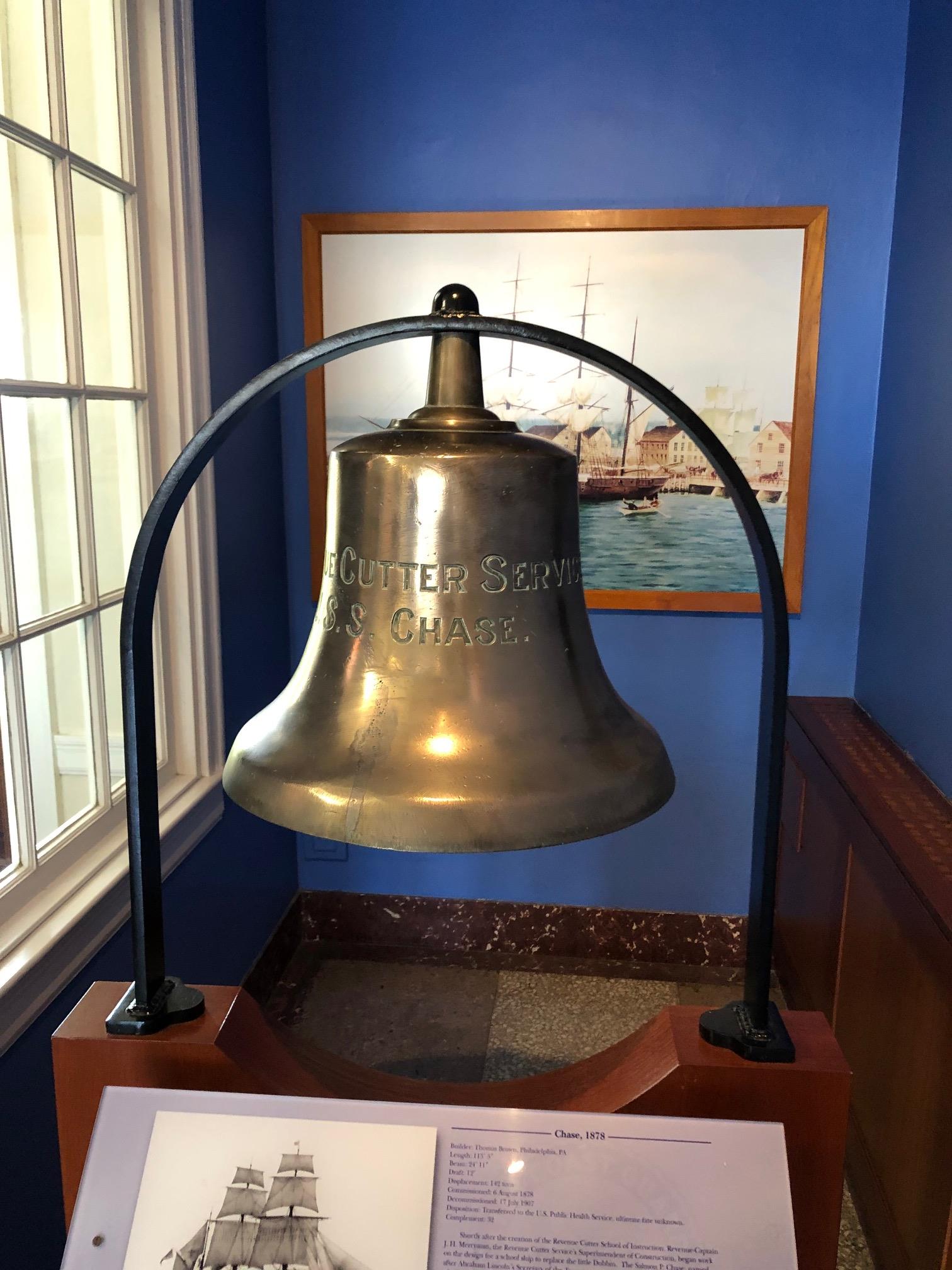 He is then instructed to report on board the revenue bark Salmon P. Chase, stationed at New Bedford, Massachusetts, where the members are allowed a few days to prepare themselves for sea and get accustomed to ship routine. The cadet school ship is a bark about 154 tons burden, with a length between perpendiculars of 106 feet, and a breadth of beam of 25 feet. She was built in Philadelphia in 1878 expressly for this service and is designed and equipped for the training and accommodation of cadets. She carries a battery of four broadside guns. The steerage, or apartment in which time cadets live, contains six staterooms, with two berths each, washstand, and lockers sufficient for clothing. At present there are two classes under instruction, designated as senior and junior, and since the organization of the system seven classes have graduated, consisting of a total membership of 31, and commissioned as third lieutenants. The classes vary in number from year to year, in accordance with existing vacancies, the largest thus far containing 11 members, and the smallest three. The port routine is made up of daily application and recitation in the academical branches; physical exercises, which include simple athletics, rowing, and going aloft; and professional studies and drills in navigation, seamanship, gunnery, signaling, etc., either practical or theoretical, as the temper of the weather permits.
Certain hours are provided by the internal regulations of the ship for recreation, and only on Wednesday and Saturday afternoons, and on Sunday after muster and inspection, are the cadets granted liberty on shore, except by special approval of the commanding officer. They mess among themselves, and elect their own caterer, and while under instruction are required to wear a prescribed uniform. The use of tobacco and intoxicating beverages, in any form, is prohibited. A list of demerit marks is in force for breaches of discipline or violations of the rules, and careful records are kept of the standing of each cadet in his studies and deportment, and submitted to the department, which, with his examination averages, determine his relative rank in his class after the graduating ceremonies at Washington at the end of the course.
The last-named consists of two years (subject to an additional year), and is divided into four terms, each year embracing two terms, as follows: from June to January, which includes the practice cruise at sea of the three summer months, and a week’s vacation during the Christmas holidays; and from January to June. In the latter parts of December and May, semiannual and annual examinations respectively occur, which contain a summary of questions and exercises covering the subjects that have previously been pursued.
The academic course is under the charge of Mr. Edwin Emery, a graduate of Bowdoin College, and for a long time a teacher and principal in public schools. It takes up arithmetic, algebra, geometry, astronomy, and trigonometry (plain and spherical); the history of the origin and growth of the English language; composition, rhetoric, and correspondence, in which the cadets are required to write upon abstract, imaginary, descriptive, and professional subjects, and to construct official letters, reports, and forms; philosophy and steam engineering, the latter being treated both practically and theoretically, and supplemented by lectures of Consulting Engineer Charles E. Emery, Ph.D., of New York; history of the world in general, and of the United States in particular; that part of international law which deals with the rights of nations in peace and war, rights of jurisdiction over the sea, and of commerce; embargoes, law of contraband, blockade, right of search, offences against the law of nations, piracy, etc.
In constitutional law, the history of the Constitution is taught, and the legislative, executive, and judicial departments, and powers of Congress, are discussed, while the revenue law comprehends all that relates to the duties of an officer of the customs, such as the regulations of commerce and navigation, collection districts, and ships papers.
About the 1st of June, the Chase puts to sea, with four officers, a surgeon, two classes of cadets, and a crew of thirty men. She is provisioned, stored, and fitted for a three months’ cruise. Here is where the test of a young man’s endurance, pluck, and energy commences, as he is subjected to many of the inconveniences and discomforts incident to a sea-voyage, at the same time having to perform all the duties belonging to the vocation of a sailor.
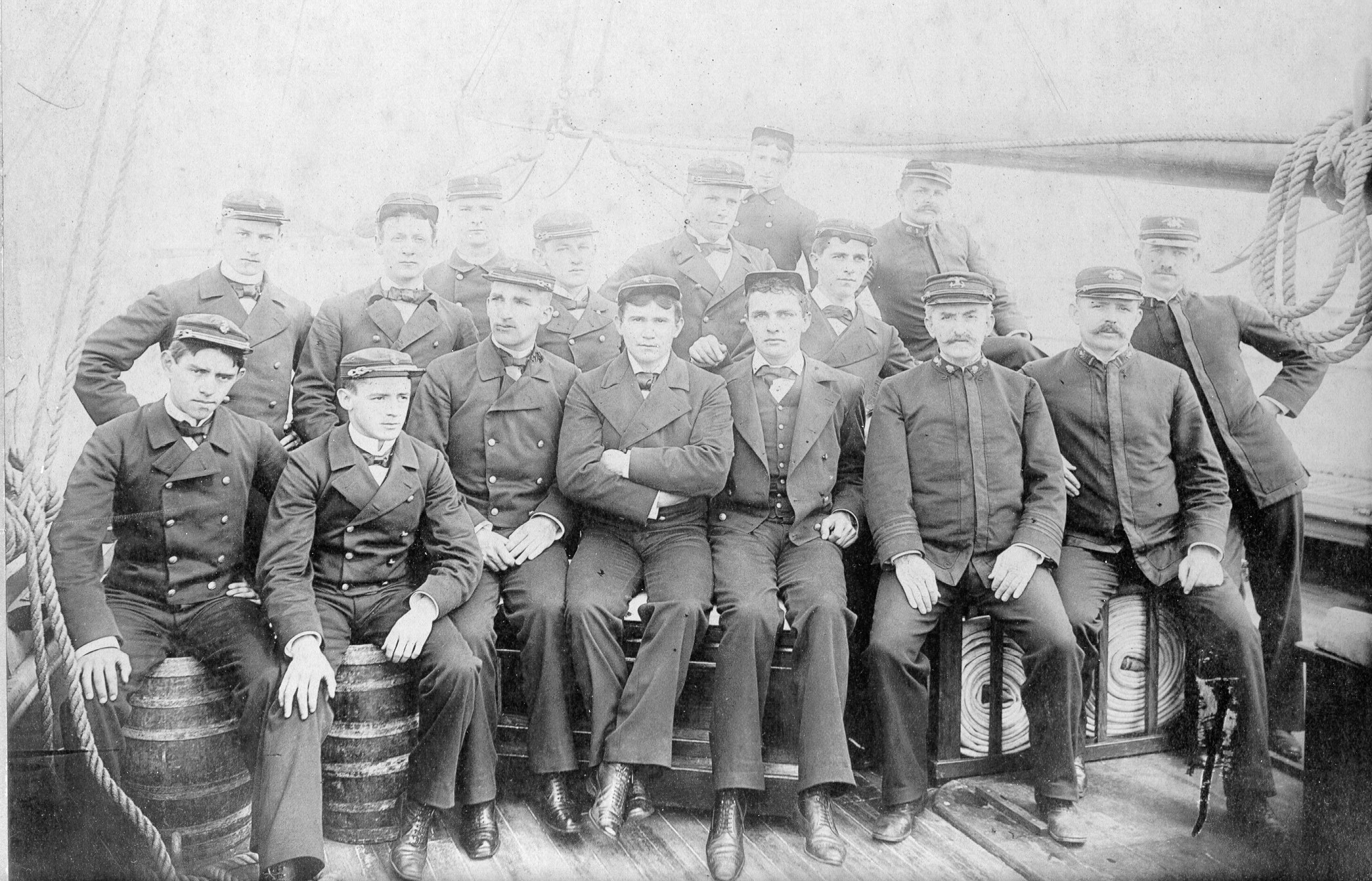 He has a taste of the sternest and most trying obligations at the threshold of his undertaking, which results in a pretty thorough test of his metal, and if anyone is actually unfit for the sea, physically or otherwise, the fact is at once brought to the surface, and gives him an opportunity to turn back at the beginning of a career in which he would not be likely to succeed. The cadets are arranged into watches, and in this capacity they are under the instruction of the officer of the deck, and are required to write up the remarks in the rough log, to observe carefully the making and taking in of all sail, to study the various evolutions of the vessel, transmitting and giving commands when directed, and, after reaching a certain degree of proficiency, they are exercised in charge of the deck, and in working ship in the important operations of tacking and wearing. The object is to impress them with the duties and responsibilities of deck officers, and the strictest obedience to every detail is enforced. Knotting, splicing, making mats, and learning the nomenclature of the different parts of the hull and spars, and the names and uses of ropes and sails, are among the first lessons in seamanship, and during periods of calm weather the rigging is reset and rattled down. The cadets are given constant practice in raising shears, stepping masts, reefing, furling, and shifting sails, and in sending up and down yards. Each takes his trick at the wheel and acquaints himself with the mysteries of the compass and the steering gear. The marlinespike, slush and tar pots, are the insignia of a thorough-going salt, and the young man who has never immersed his hands in the resinous substance finds ample opportunity on a practice cruise.
In navigation, the cadets are exercised in taking altitudes with the sextant, of the sun, moon, planets, and stars. They are required to determine daily the latitude and longitude of the vessel and establish the ship’s position by dead-reckoning and by the different sailing problems. The variation, deviation, and error of the compass is ascertained; in port, artificial horizon sights are used to discover the error of chronometer. The classes are educated in the international and general service signal codes, the latter usually being practiced on shore, the cadets receiving and transmitting messages by a system of flag movements. The use of small-arms and broadswords is comprised in the port routine, the cadets being drilled in military marches and tactics, target shooting, etc.
The gunnery exercises consist in the distribution of officers and men at general quarters. The cadets are trained in the working of all classes of broadside and pivot guns, and are familiarized with the duties and stations of officers of divisions; they are taught the construction of magazines, the uses of fuses and projectiles, and the nature and properties of powder and combustibles; are stationed at fire quarters and at the boats, and in ease of an alarm at sea are required to act promptly in the discharge of their several duties.
 On the practice cruises the Chase usually touches at some foreign port for supplies and mail, having been on different occasions to England, France, Spain, Portugal, Gibraltar, the Azores and Bermuda Islands. She returns to the American coast in August and devotes the latter portion of the cruise to active nautical evolutions in the bays and harbors.
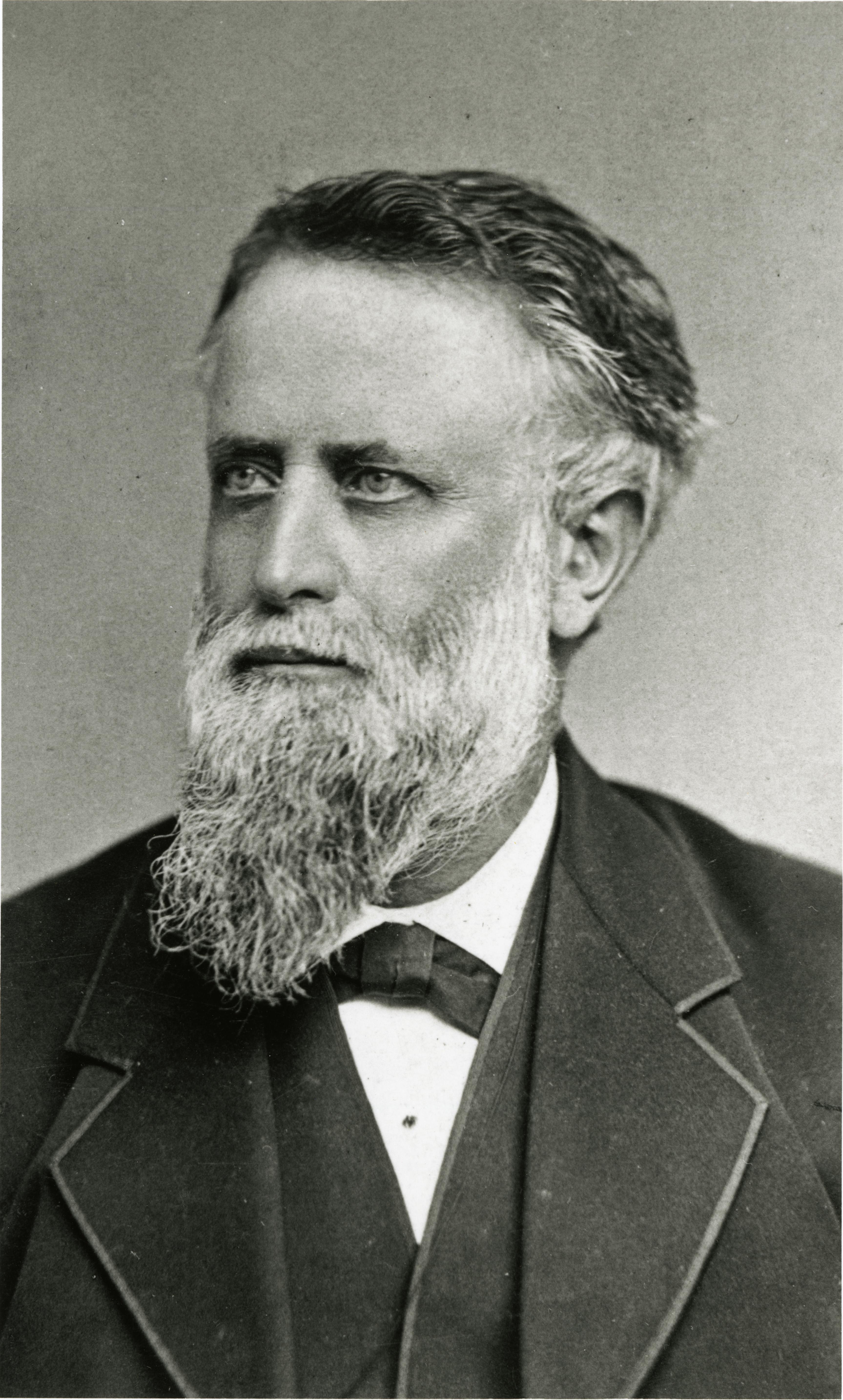
Captain John A. Henriques was the first officer who had general charge of the school, being identified with it for about six years. The system owes much of its success to his excellent management. At present the Chase is commanded by Captain Leonard G. Shepard, an able and efficient officer. It may be pertinent to remark that the saving between the compensation of third lieutenants and cadets, and the annual saving through salaries held in abeyance, accruing from the vacancies in the former grade, is sufficient to defray the entire expense of instructing the cadets from year to year.