“There isn’t anything unusual in a woman keeping a light in her window to guide men folk home. I just happen to a keep a bigger light than most…”
- Keeper Margaret Norvell, U.S. Lighthouse Service
Margaret (aka Maggie or Madge) Celest Dimitry Ruth Norvell was born on February 11, 1862, in Washington, D.C. Her parents, Elizabeth (Eliza) Virgina Dimitry and Enock Fenwick Ruth were from socially prominent southern families with deep historic roots. Her maternal grandfather, Alexander Dimitry, was a renowned author, diplomat, educator, journalist, lawyer, orator, and publicist. He was the first state superintendent of public instruction in Louisiana and represented the United States as Ambassador to Costa Rica and Nicaragua. Of Greek and Creole heritage, he also served as Assistant Postmaster General of the Confederacy during the Civil War. Maggie’s mother was also an accomplished poet, author, and educator. After the death of Maggie’s father in 1867, her mother moved the family back to their ancestral home in New Orleans. (Note: Over the course of her lifetime, Margeret Norvell was also known as “Maggie” and “Madge.” She identified herself as Maggie in her official Lighthouse Service personnel file. For consistency I do the same in this essay.)
|
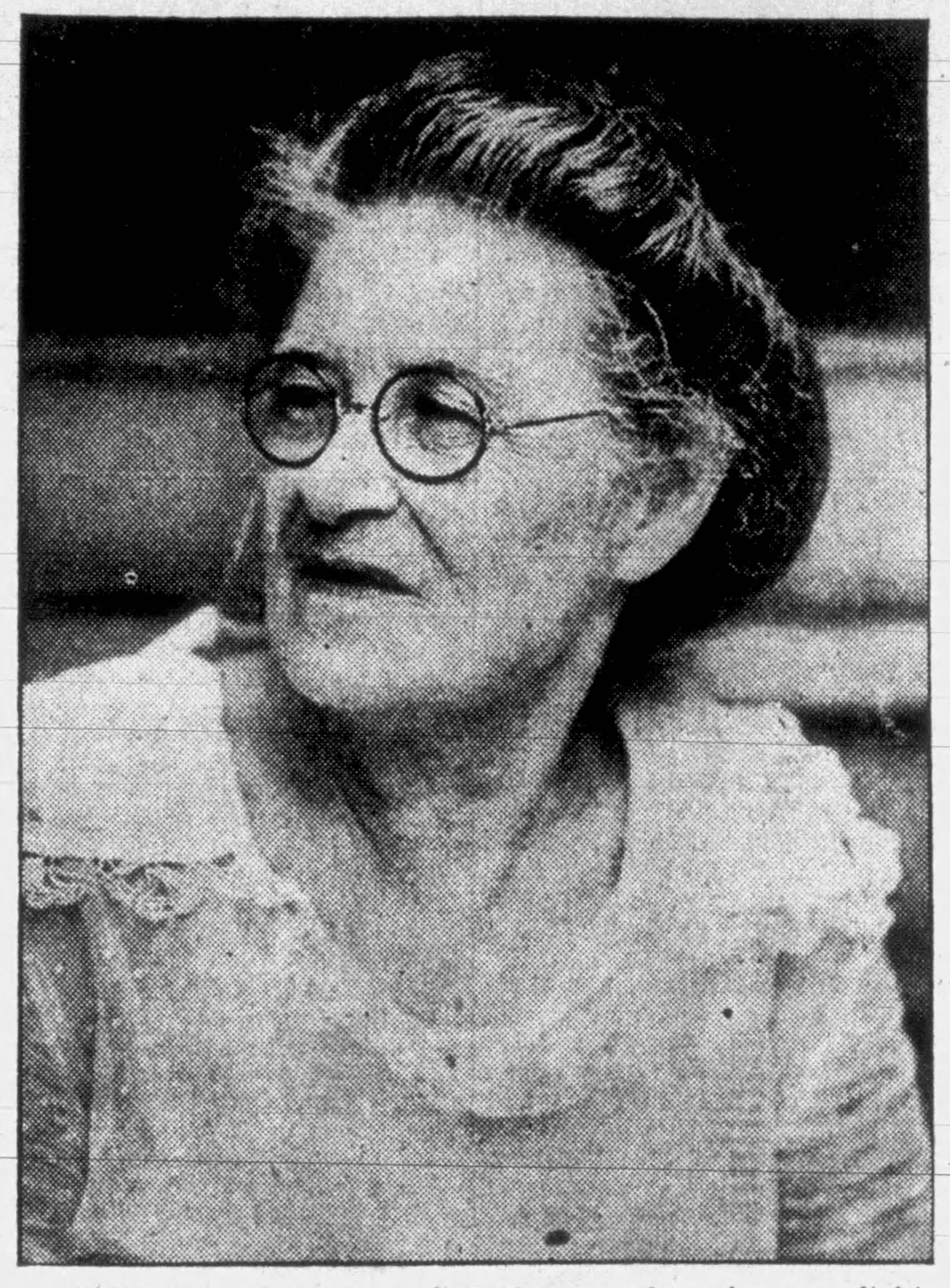 A newspaper photo of long-time lighthouse keeper Margaret Norvell. A newspaper photo of long-time lighthouse keeper Margaret Norvell.
(New Orleans States Item, July 18, 1934)
|
Maggie grew up in New Orleans, enjoying the life and privileges of a young socialite with connections to many of the most distinguished and proud families in the city. She married a wealthy cotton broker from St. Louis named Louis G. Norvell in 1883. Shortly after they were married, Louis made a string of poor investments and lost his fortune. Now desperately in need of a new career, Louis used his contacts to secure a position with the Lighthouse Service. This unusual turn of events would be the beginning of Maggie’s storied career as Keeper at three different Louisiana light stations spanning over four decades. Her career was not without trials, tribulations, and the occasional controversy. Her official personnel records include both letters of commendation and reprimand. What follows is a brief glimpse into the complex, colorful, and fascinating life of Keeper Maggie Norvel.
|
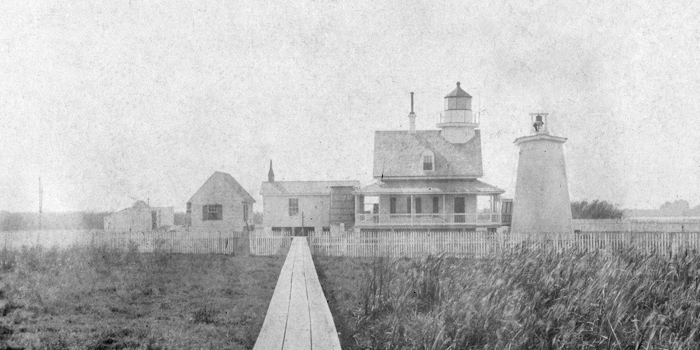 A 1913 picture of the Head of Passes Light Station where Margaret Norvell served. (U.S. Coast Guard) A 1913 picture of the Head of Passes Light Station where Margaret Norvell served. (U.S. Coast Guard)
|
Head of Passes Light Station
Louis’s first assignment was as Assistant Keeper at Southwest Pass Light Station in 1887. He was promoted to Keeper at Head of Passes Light Station at the mouth of the Mississippi River in 1889. Long recognized as the geographic and navigational fulcrum of the Mississippi, Head of Passes Lighthouse stood as both guide and witness to one of North America’s most unstable landscapes. Located on Deer Island at the point where the Mississippi divides into its principal outlets—Pass a Loutre, South Pass, and Southwest Pass—the station marked what came to be regarded as the “prime meridian” for the Mississippi River. All distances on river charts are measured “AHP,” or Above Head of Passes, acknowledging the site’s fixed importance even as the delta itself crept steadily seaward. The station was also exposed to the deadly power of Gulf storms and hurricanes. Not exactly the most comfortable place to raise a family.
The dangers of the station became very real in 1891 when Louis drowned attempting to rescue a mariner in distress. As was customary practice of the time, Maggie was appointed acting keeper of Head of Passes Light Station on April 22, 1891, and Keeper on March 10, 1892. In addition to tending to all responsibilities at the station, she was now a single parent, raising two small children.
In October 1893, a powerful hurricane devastated the Mississippi Delta, killing an estimated 2,000 people. “I could look into the swirling water and see people being swept by,” recalled Maggie in later newspaper interview. “I was powerless to help them.” She opened the light station to refugees from the storm, caring for more than 200 people until assistance arrived from farther inland. This effort to render aid to those in peril would be the first of many to follow.
The first administrative bump in Maggie’s career came in October of 1896 when she received transfer orders to be Keeper at Port Pontchartrain Light Station. In a handwritten letter to the Secretary of Treasury appealing the transfer, she expressed her surprise, disappointment and pleads her case: “Only yesterday I received the written order—I had not the least inclination of it until I received it. I would beg you, my dear sir, to allow me to remain at this station.” Maggie’s surprise was a bit overstated. She had conflicted with her new Assistant Keeper who had gone behind her back, convincing the 8th District Lighthouse Inspector, Commander, J.B. Coghlan, USN, that Maggie would be unable to manage the challenges of the station in his absence. Despite Maggie having successfully managed the rigors of this remote station for over five years, the Inspector sided with the Assistant Keeper. Maggie and her children, Thomas and Lillian, were off to Lake Pontchartrain. In retrospect, it turned out to be a good move.
|
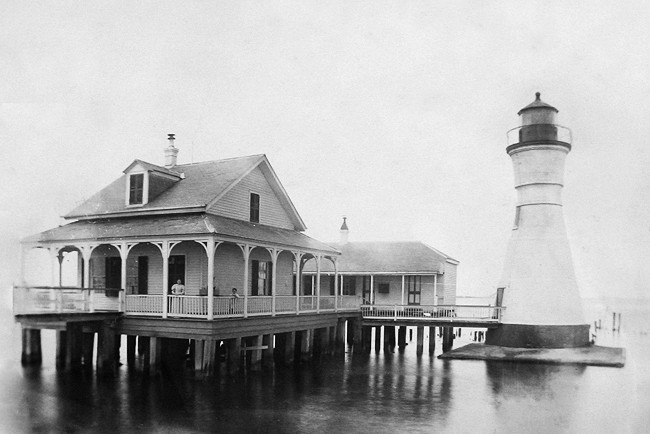 The Port Pontchartrain Light Station where Margaret Norvell once served. (National Archives) The Port Pontchartrain Light Station where Margaret Norvell once served. (National Archives)
|
Port Pontchartrain Light Station
Port Pontchartrain Lighthouse was located near the terminus of the Pontchartrain Railroad in the town of Milneburg on the shore of Lake Pontchartrain. Built to connect Milneburg to the French Quarter, the cool waters of the lakeshore made the railroad particularly popular with New Orleans residents during the sweltering summer months. Port Pontchartrain, the lake’s first artificial harbor, was also constructed at Milneburg and offered connections to the health resorts located on the lake’s northern shore. The railroad company erected a crude light to serve as the port’s first navigational aid. The first federal light, an octagonal wooden tower, was completed in 1839. That structure was replaced by a brick tower constructed 2,100 feet from shore on a concrete pad supported by pilings driven into the lake bottom. The new lighthouse was completed in 1855 and equipped with a fifth-order Fresnel lens. By the time Maggie arrived at Port Pontchartrain in 1896, extra brickwork had been added to increase the diameter of the top of the tower and a new lantern installed. The tower improvements elevated the light 35 feet above sea level, giving a visibility of ten miles.
In another bit of interesting history, Maggie replaced Mrs. Ellen Wilson, the previous Keeper at Port Pontchartrain, who had passed away on October 24, 1896. Maggie would be the second of three consecutive women Keepers at the station. She was relieved by Minnie E. Coteron, the final Keeper at Port Pontchartrain.
Port Pontchartrain Light Station would be Maggie and her children’s home for over 27 years. She became a fixture on the waterfront gaining recognition and admiration for her devotion to duty and many lifesaving exploits. An account of Maggie’s career in the Morning Tribune newspaper of June 26, 1932, recounts the numerous lives she saved. “I have often rung my fogbell,” she said, “to get help for overturned boats or to signal directions to yachts.” During one storm, she threw a line to the crews of both a yacht and schooner, bringing them safely into the lighthouse and providing food and shelter for several days until the stormed abated. The article goes on:
It is not only the shipwrecked to whom Mrs. Norvell opened her doors. In every big hurricane or storm here since 1891, her lighthouse has been a refuge for fishermen and others whose homes have been swept away. In the…storm of 1903 Mrs. Norvell’s lighthouse was the only building left standing on the lower coast, and over two hundred survivors found welcome shelter in her home. After each storm she started the relief funds and helped the poor folks get back to normal.
Maggie’s official record contains letters of commendation for assisting with the transport of Captain William Willis to the lighthouse from the steamer Hanover on September 16, 1914, after he became suddenly ill. She then nursed Captain Willis until his passing on September 18th.
A Bit of Family Trouble
Maggie was a loving, devoted mother. She was a strong, independent women who raised a daughter and son as a single parent on remote light stations. Her devotion to her children and strong personality set the stage for a near career-ending episode. The proximity of the Port Pontchartrain Light Station allowed Maggie to renew her connections with many of the socially prominent families of New Orleans. Maggie and her children, especially her daughter Lillian, were regularly active in social circles and charitable causes. They appeared often in the society pages of the local newspapers. Maggie supported numerous charities and hosted popular social events at the lighthouse. In an article in the New Orleans State-Item newspaper Maggie is praised as a “Friend of Girls,” going on to say that “Mrs. Norvell’s interests were not confined alone to the sea and her duties connected with it. She was one of the earliest organizers of lakeshore outings for working girls and guided hundreds of young women through thousands of happy holidays.” As a debutant with family connections to the New Orleans elite, Lillian was even more prominent in the society pages.
This notoriety would lead Maggie to an incident that garnered negative attention from her superiors in the Lighthouse Service. In November 1916, Lillian eloped, marrying Luis Mejia, a renowned cellist from Mexico who performed with a local orchestra. She was 26 and he was 38. They chose to elope because Lillian knew Maggie would never approve. Wow, was she right! For several weeks before the wedding, Lillian had been staying in town with family friends, Mr. and Mrs. George Augustin. Maggie became convinced that the Augustin’s had encouraged the wedding. A charge the Augustins strongly denied. Maggie went as far as to allegedly make death threats in both phone calls and letters. As one can imagine, this garnered many inches of print in the local society pages, much to the chagrin of the Lighthouse Service. Mr. Augustin also expressed his concerns in letters to Maggie’s superiors. Maggie’s actions nearly ended her Keeper career. They also added some remarkably interesting official correspondence and a couple stern letters of reprimand to Maggie’s personnel record. While Maggie’s reaction to her daughter’s elopement was drastic and dramatic, the ensuing hoopla added spice to researching this fascinating woman’s history.
|
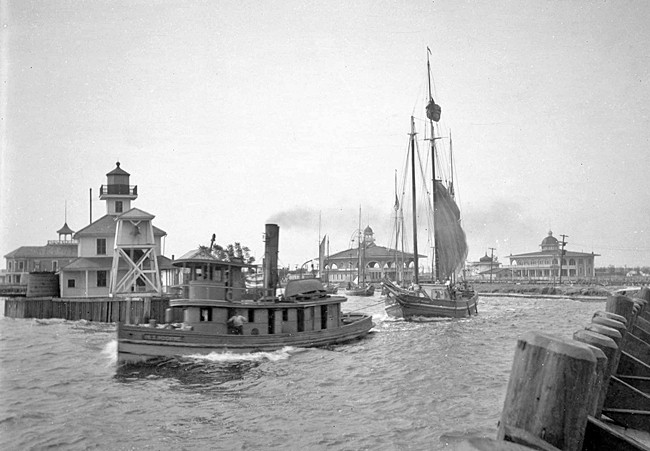 A vintage image of the New Canal Light Station near New Orleans. (New Orleans Public Library photo) A vintage image of the New Canal Light Station near New Orleans. (New Orleans Public Library photo)
|
New Canal Light Station
Back to lighthouses. On April 1, 1924, Maggie was transferred to the New Canal Light Station, also known as West End Light, located to the north along the shore Lake Pontchartrain. While there was still much maintenance to be done, this light had been “electrified,” easing the burden for the Keeper. Maggie continued her lifesaving exploits at her new station. She is remembered for several valiant rescues. On one occasion, she used the station’s rowboat to save a Navy pilot, who had crashed his biplane into the lake during an unexpected squall. Sailors who passed by her light called her “Old Salt,” admiring her steadfast attention to duty and proudly sharing stories of her heroism. In 1925, she helped evacuate passengers from the ferryboat Southland that caught fire and sank near the lighthouse. This rescue would add to her legend in another improbable turn of events.
|
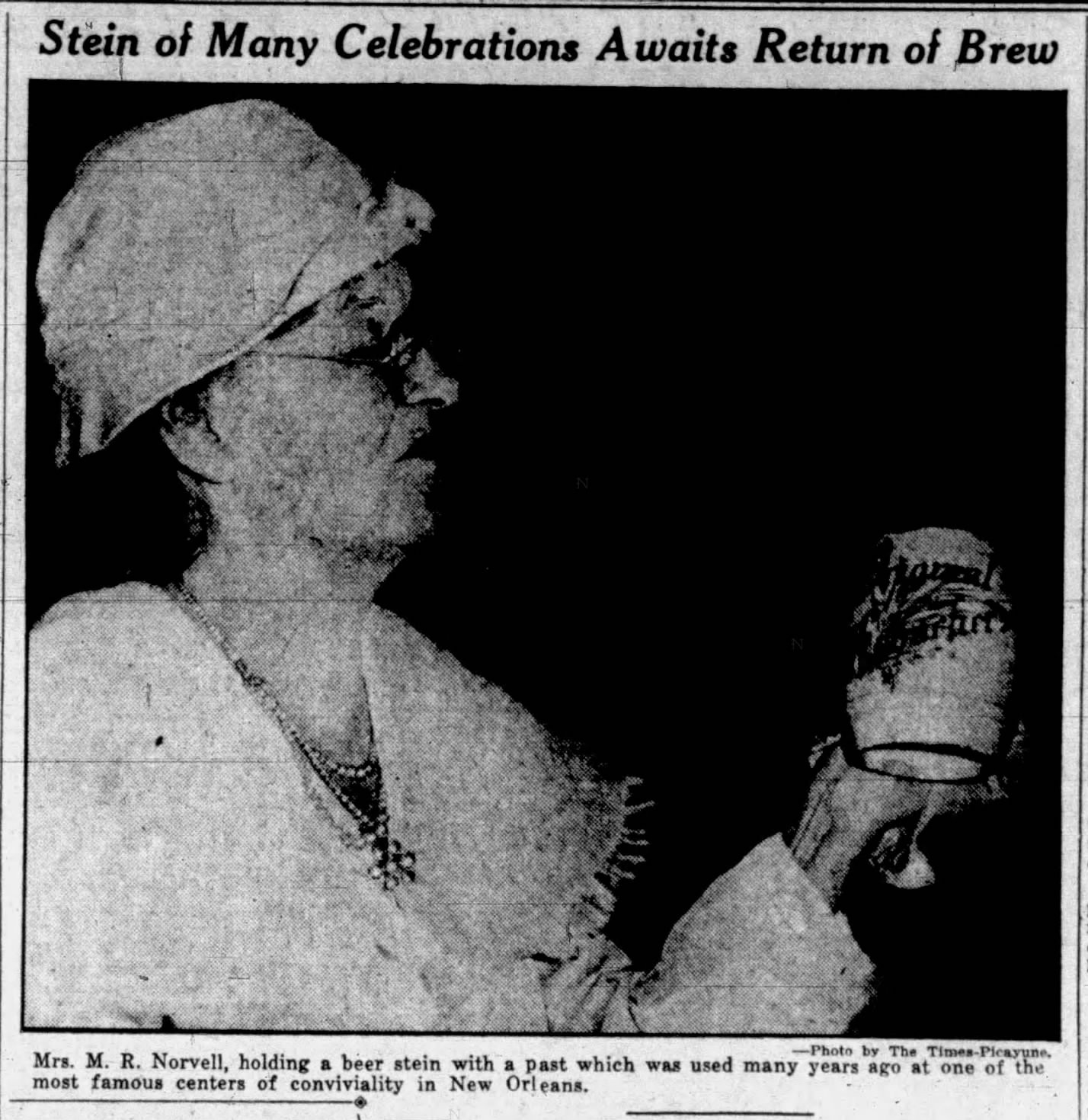 Newspaper photograph of Maggie Norvell hoisting Fabacher stein. (Times Picayune photo, April 11, 1933) Newspaper photograph of Maggie Norvell hoisting Fabacher stein. (Times Picayune photo, April 11, 1933)
|
The Fabacher’s Stein
Tony Fabacher’s was a popular restaurant and pub on the corner of Iberville and Royal Street in New Orleans. One of the signatures of the place was custom beer steins made exclusively for Tony. As described in a 1933 article in the Times Picayune newspaper, they were
"heavy, dun-colored, barrel shaped with a strong convenient handle just the right shape for convivial clasping. On the front under the words ‘Original Fabacher’s’ in Old English letters was a bunch of grain and hops.” The article goes onto explain that “They used to raise Tony Fabacher steins and sing whenever a big event happened—a new baby, a business scoop, a wedding in the family, the end of a trip or the beginning of one, the inauguration of a president or mayor, the battles and parades—all were made the subject of stein songs at Tony Facher’s.
Sadly, the restaurant hit troubled times and went under. Supplies, including the famous steins, were auctioned off. Many of the steins were purchased for a private camp located on Lake Pontchartrain in Milneburg. A devastating storm in 1915 destroyed the camp and other summer resorts. The famous steins went into the lake. A small boy caught one of the steins with his fishing line and sold it to Maggie. Quoting the Times Picayune article, “Mrs. Norvell had a memory of Fabacher’s and a mind for romance…The stein rested in solitary glory on her mantlepiece.” In a weird twist of fate, one of the cold, shivering passengers rescued and brought to the lighthouse from the burning ferryboat Southland was none other than Tony Fabacher! He was treated to revival refreshments from Maggie’s Fabacher stein. In addition to the saga of the shipwreck, the Times Picayune article included a photo of Maggie hoisting the stein as New Orleans prepared for the end of Prohibition. Maggie was once again the star of society pages.
A Life Well Lived
Maggie crossed the bar on July 17, 1934. The following matter-of-fact description of her career appears in the “Notice of Death” in her official personnel record:
The records of this office show that Mrs. Norvell was appointed acting keeper at Head of Passes Light Station, La., April 22, 1892; Keeper March 10, 1892; transferred as Keeper of Port Pontchartrain Lighthouse, La., October 31, 1896; transferred as Keeper of New Canal Lighthouse, La., April 1, 1914, and retired from active duty effective May 1, 1932, this completing a length of service of 41 years, 0 months and 9 day.
This bureaucratic narrative does a paltry job of capturing the extraordinary life, service, and dynamic personality of Mrs. Margaret Celest Dimitry Ruth Norvell—the storms survived, the lives saved, the children raised, the fun and excitement created.
|
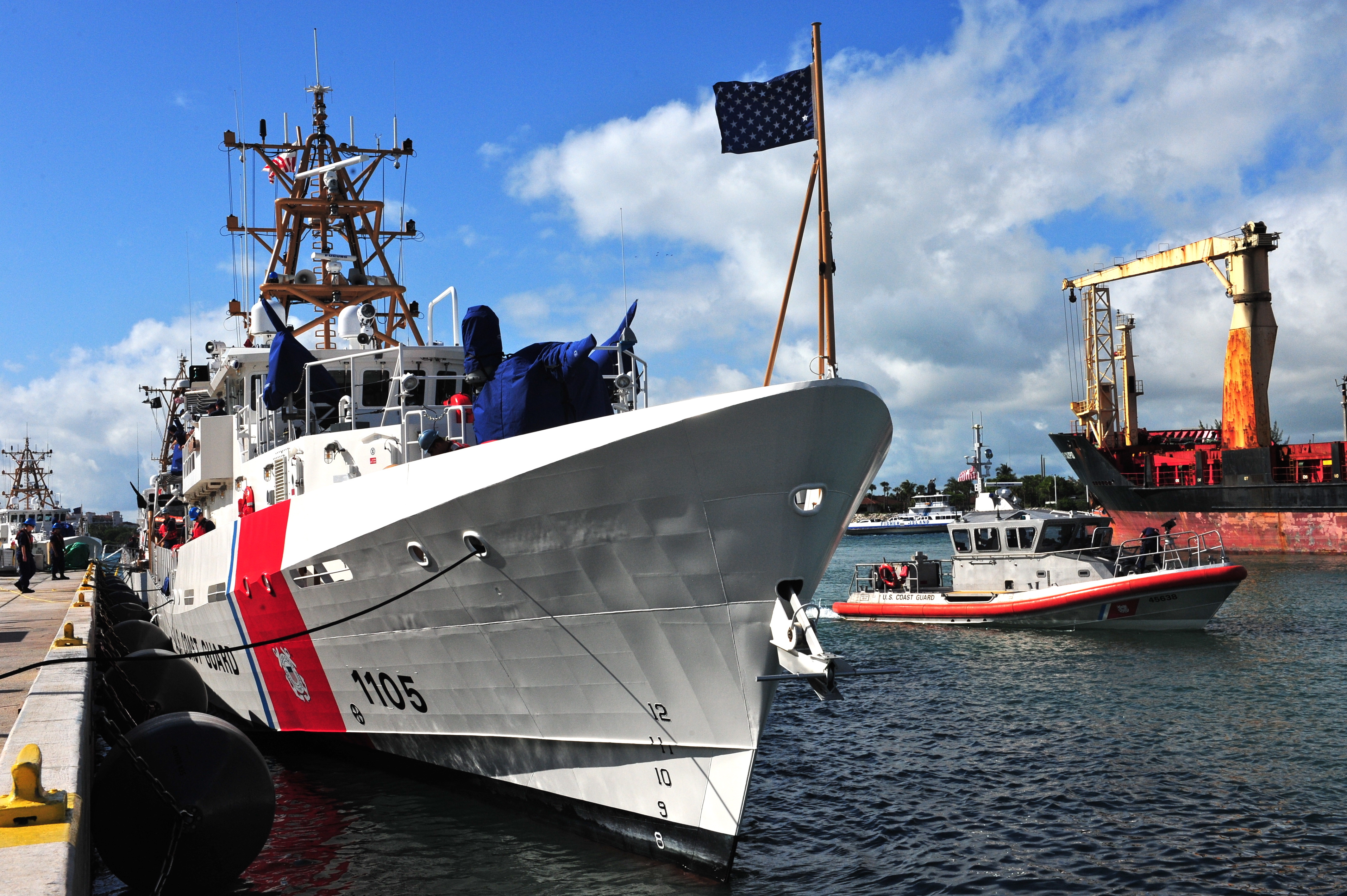 The Coast Guard Cutter Margaret Norvell is moored at Coast Guard Sector Miami while a Coast Guard small boat provides an escort May 5, 2013. The cutter is named after Coast Guard heroine Margaret Norvell who served admirably for 41 years with the U.S. Lighthouse Service in Louisiana from 1891 to 1932. U.S. Coast Guard photo by Petty Officer 3rd Class Jon-Paul Rios. The Coast Guard Cutter Margaret Norvell is moored at Coast Guard Sector Miami while a Coast Guard small boat provides an escort May 5, 2013. The cutter is named after Coast Guard heroine Margaret Norvell who served admirably for 41 years with the U.S. Lighthouse Service in Louisiana from 1891 to 1932. U.S. Coast Guard photo by Petty Officer 3rd Class Jon-Paul Rios.
|
USCGC Margaret Norvell (WPC-1105)
On June 1, 2013, the cutter Margarett Norvell was commissioned at Mardi Gras World on the East Bank of the Mississippi River in New Orleans, within miles of the light stations where Maggie spent her career. The fifth of the Sentinel-class cutters, Margarett Norvell is based in Miami, Florida. The exploits and accomplishments of cutter and crew continue to honor Maggie’s life and legacy. Semper Paratus!
-USCG-